
Making Exodus
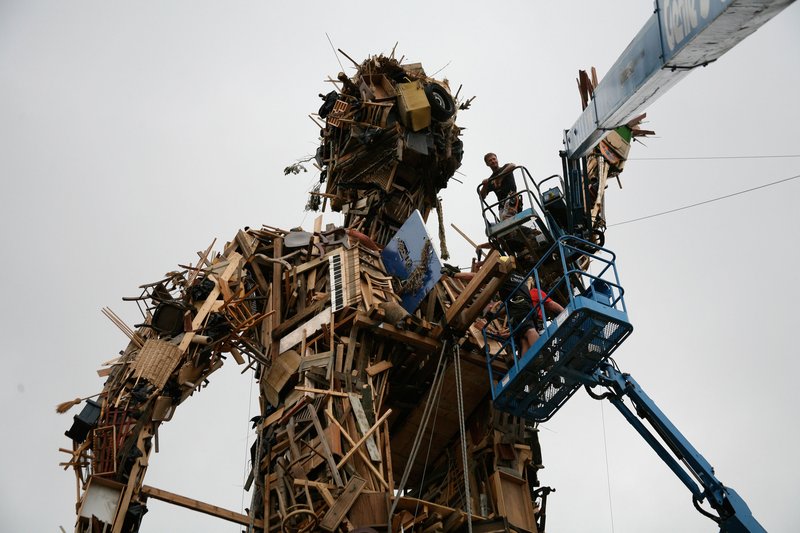
Antony Gormley was commissioned to create an epic sculpture in the car park next to Dreamland, Margate, to be burnt in a key scene of Exodus. This burning was a central event on Exodus Day, a public event in Margate on 30 September 2006. Constructed entirely of the detritus of modern consumer society – planks of wood, tables, chairs, keyboards, paintings, dartboards, a front door, toilet seats – the 25 metre high man took over four weeks to construct by Gormley, his assistant, a team of professional riggers and a small army of enthusiastic volunteers from Margate. The building and burning of the Waste Man not only formed a definitive part of Penny Woolcock’s epic film but was also the subject of a Channel 4 documentary by Caroline Deeds – also titled Waste Man – in its own right.
Plague Songs
So, the plan; first the snakes, then Pharaoh's hardened heart, and then, and then...
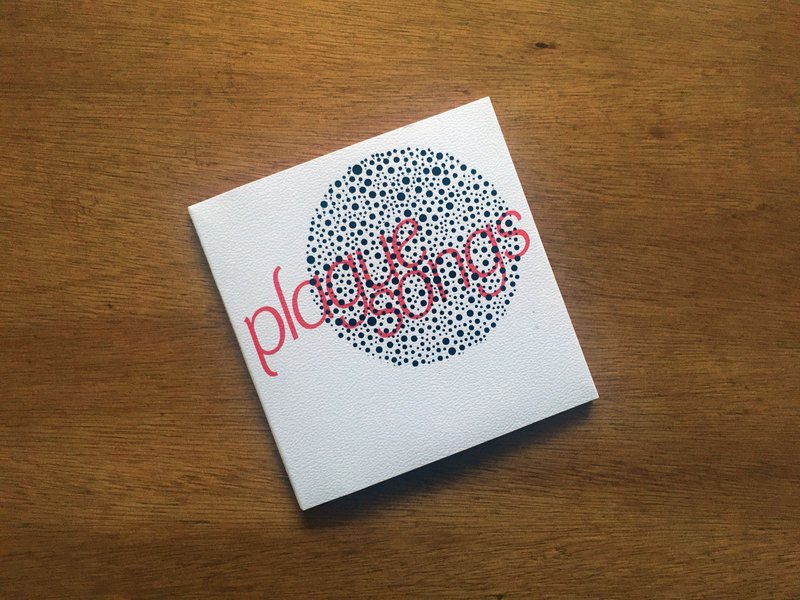
This album contains 10 tracks commissioned as part of Exodus. Each songwriter was asked to create a song for one of the 10 plagues inflicted upon Egypt. These songs were also performed live at the Winter Gardens in Margate on Saturday 30 September 2006 by an eclectic range of local musicians and singers with musical direction from David Coulter and vocal coaching by Mary King.
- Featuring tracks by: Klashnekoff, King Creosote, Stephin Merritt, Brian Eno with Robert Wyatt, Laurie Anderson, Cody ChesnuTT, The Tiger Lillies, Imogen Heap, Scott Walker and Rufus Wainwright.
- Released 2 October 2006
- Label 4AD
- Mastered by Adam Nunn at Abbey Road
- Designed by Niall & Nigel at Pony
Michael Morris, July 2006

I first visited Margate with the writer and filmmaker Penny Woolcock in January 2002. For some time, I had hoped Penny might make a project with Artangel.
Something about Margate suggested to her the biblical story of exodus – an epic and timeless tale of migration and the search for a promised land with all its attendant hopes and disappointments.
Before we knew it, we’d embarked on the planning of a film which would incorporate a series of ambitious live events and involved as many Margate inhabitants as would like to collaborate. We imagined the ten biblical plagues as songs specially written by some of the world’s most interesting artists and played live at the Winter Gardens in Margate by local residents. The producer Hal Willner was happy to lend a hand and he and I began to compile wish-lists from both sides of the Atlantic. 4AD came on board in late 2005, by which time we had enough people writing songs to make it feel possible.
The briefs we gave the artists couldn’t have been more open. I’d like to thank them all for taking on such an unusual commission.
Penny Woolcock
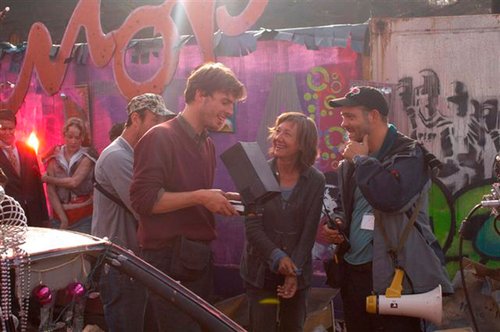
Penny Woolcock
Penny Woolcock’s feature films include her award-winning adaptation for Channel 4, of the John Adams opera The Death of Klinghoffer. Woolcock’s films are generally informed by a strong social conscience, and are much concerned with the social, cultural and political life on Britain’s toughest housing estates. From her first films When the Dog Bites, Shakespeare on the Estate and the features Tina Goes Shopping and Tina Takes a Break, Woolcock has been fascinated with the humour, invention and resourcefulness required to survive on the margins. Mischief Night, her third and final film in the Tina trilogy, was released nationwide in November 2006.
Incorporating elements of sci-fi and Shakespearean romance, Woolcock’s script is deft and inventive in finding equivalents for incidents in the biblical Moses story. – John Dugdale
In Penny Woolcock’s reworking of the Old Testament account of the Israelites’ exile, Moses (Daniel Percival) is the abandoned child of a fleeing refugee. Rescued by Batya (Ger Ryan), he grows up as the adopted son of her husband, Pharaoh (Bernard Hill), a politician who confines undesirables, ranging from immigrants to petty criminals, in a mixture of shanty town and concentration camp called Dreamland. [...] Incorporating elements of sci-fi and Shakespearean romance, Woolcock’s script is deft and inventive in finding equivalents for incidents in the biblical Moses story. – John Dugdale, Sunday Times Culture, 18 November 2007
Any film by Penny Woolcock is worthy of attention, and her dystopian reimagining of the story of Exodus is arresting. Relocating the fable to Margate in the future, where the xenophobic politician Pharaoh Mann spreads fear and loathing while his adopted son, Moses, is drawn to the downtrodden, Woolcock’s production doesn’t always work, but it’s nevertheless compelling. It’s also quite beautiful, with even a dilapidated fairground possessing a grim splendour. And like the most powerful speculative fiction – Margaret Atwood’s The Handmaid’s Tale springs to mind – it’s all about the here and now. – Gareth McLean, Guardian, 19 November 2007
It’s not easy to make a Cecil B DeMille-style biblical epic in Margate. Especially on a budget of £2 million. The Margate Exodus has a cast of hundreds, the English Channel standing in most acceptably for the Red-Sea, a multi-media sweep and the mission to update the story of Moses leading his people to freedom. It’s either visionary or barking. – Sheila Johnston, The Daily Telegraph, 9 November 2007
Woolcock’s vision, however, transformed it into an apocalyptic nightmare. The rusting arcades of Dreamland became a mixture of the West Bank and Belsen – a place where all the undesirables were confined behind the high wire fences. They were joined there by Moses (Daniel Percival), the adopted son of the local leader Pharaoh Mann (Bernard Hill), whose black shirt and military moustache suggested more than a whiff of the Thirties’ fascist leader Oswald Mosley. – Matt Baylis, Daily Express, 20 November 2007
Written and directed by Penny Woolcock
Producer — Ruth Kenley-Letts
Executive Producer— Michael Morris
Production Designer— Christina Moore
Director of Photography— Jakob Ihre
Editor— Brand Thumim
Costume Designer— Suzanne Cave
Music— Malcolm Lindsey
Sound Recordist— Tim Fraser
Casting director— Jill Trevellick CDG
Make up and hair designer—Suzanne Jansen
Chanel 4 comissioning editor— Jan Younghusband
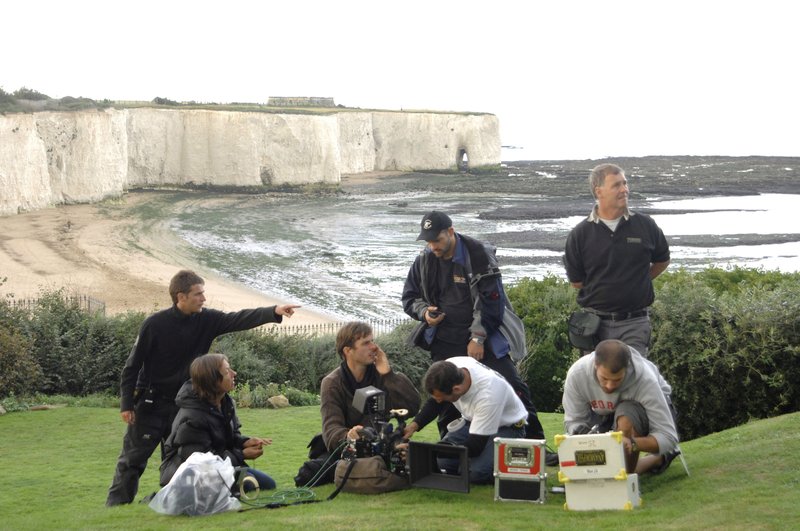
Image: Shooting Exodus on location, 2006. Photograph: Thierry Bal
Credits
Exodus was comissioned by Channel 4 and produced by Artangel in association with Arts Council England and Creative Partnerships Kent.
Artangel is generously supported by Arts Council England, and by the private patronage of The Artangel International Circle, Special Angels, Guardian Angels and The Company of Angels.

From the top::
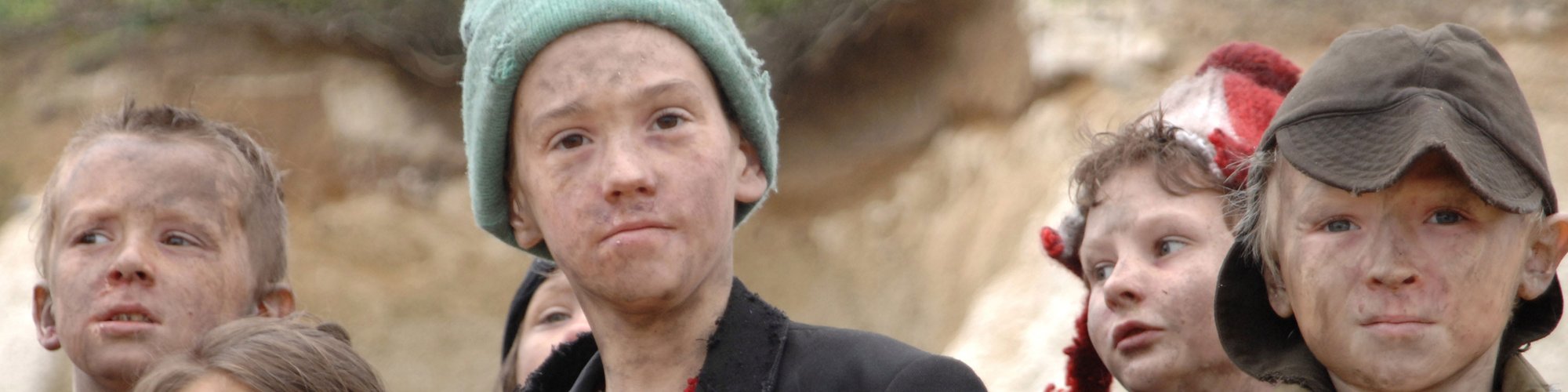
- A group of young children with smudges on their faces and dirty clothes look at the camera. Film still from Exodus dir. Penny Woolcock, Margate 2006
- Antony Gormley's Waste Man under construction. Photograph: Alexa Kent, 2006
- Image of Plague Songs album cover
- Making Plague Songs: Film still from Exodus, Margate 2006. Photograph by Thierry Bal
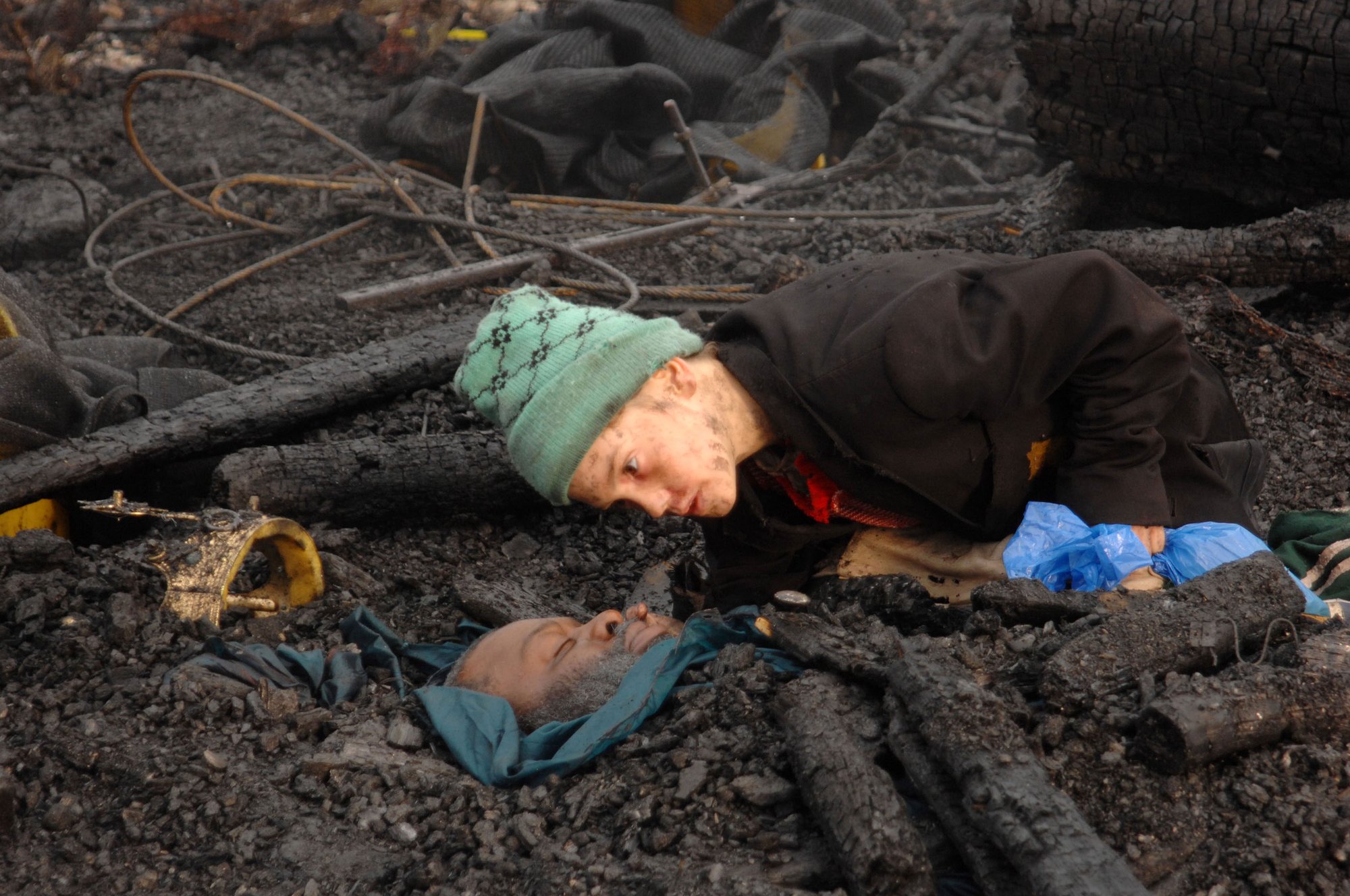
- Film still from Exodus of a young boy in a green woollen hat stares into the face of a man buried in charred earth. Film still from Exodus dir. Penny Woolcock, Margate 2006
- About Penny Woolcock: Penny Woolcock on the set of Exodus, Margate, 2006.