
The Demolition
More than 100,000 people had seen House during its 10-week tenure of a patch of scrubby parkland at the junction of Roman Road and Grove Road in London E3, and a vigorous campaign - conducted largely within the pages of this newspaper - had been mounted to save it. But the implacable opposition of Bow Neighbourhood Council - whose land it occupied and whose leader, Eric Flounders, had publicly reviled the sculpture as 'utter rubbish' and 'a little entertainment for the gallery-going classes of Hampstead' - sealed its fate. Mr Flounders had huffed and he had puffed, and by 11am yesterday he had, finally, blown House down.
[Joe] Cullen, not a man of many words, seemed somewhat taken aback by the sudden interest shown in his attitudes to modern art. He had come to bury House, not to praise it. And preferably not even to discuss it. 'It's not art, it's a lump of concrete,' he told the world's press before climbing into the cab of his vehicle, where he evidently felt rather more comfortable.
Mr Cullen turned the key in the ignition and the earthmover roared into life, slithering towards House on caterpillar tracks and raising its giant claw high in the air. The claw descended like a metal fist and the reinforced concrete structure of House split open under the impact. The claw scraped and scratched and battered away and in a surprisingly short time, Ms Whiteread's mute and cenotaph-like creation was unrecognisable. This had become just another building site in the East End. — Andrew Graham-Dixon, The Independent, January 14, 1994
Image Gallery
Photographs of the demolition of House
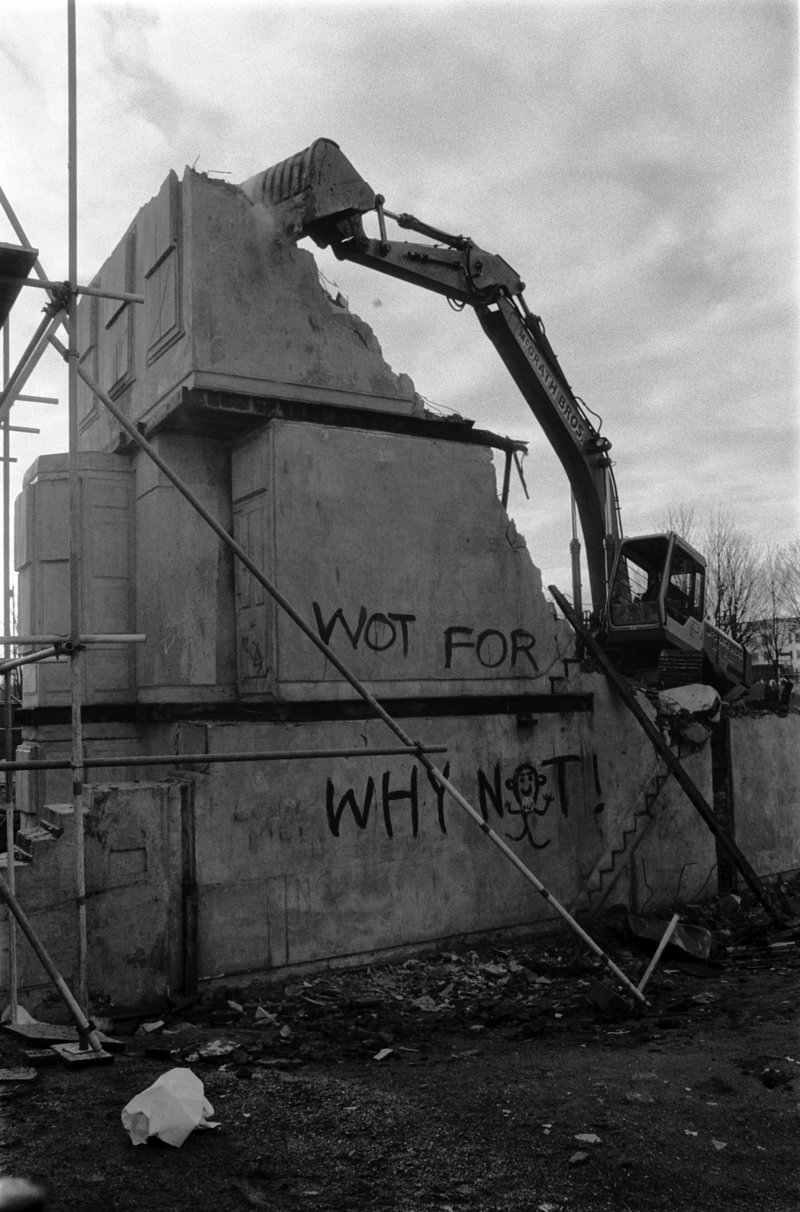
Photograph: Stephen White (1994).
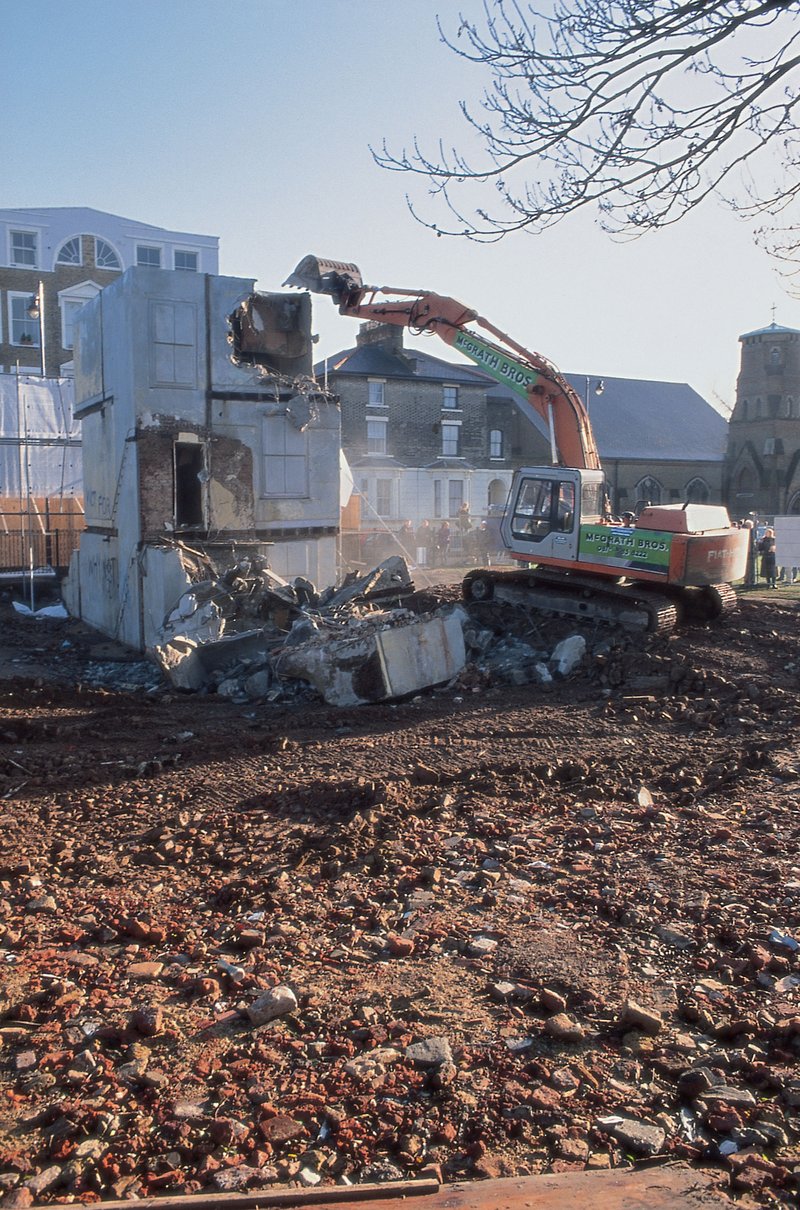
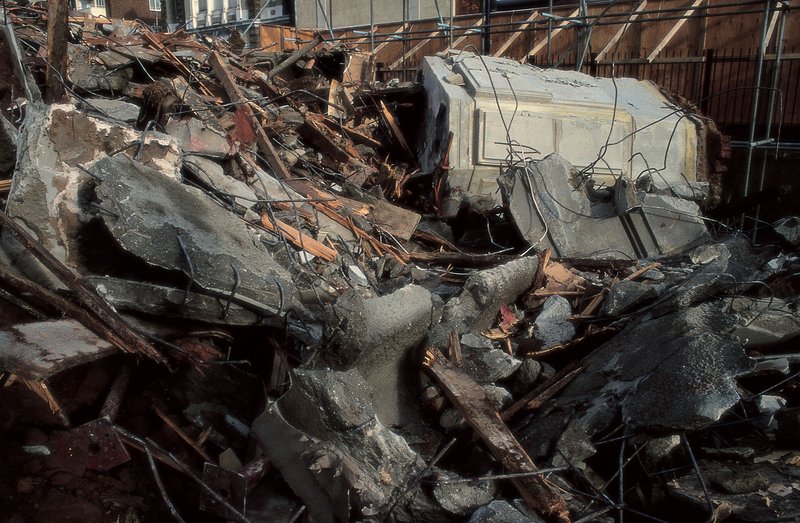
Photograph: Stephen White.
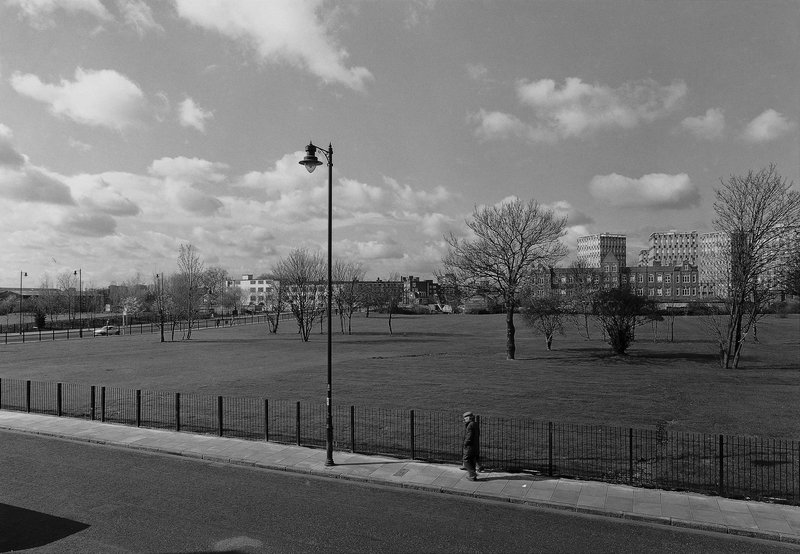
Photograph: John Davies