Writers respond to Plot
...it was quite possible to sleep undetected if I leaned on my elbows and screened my eyes with my hands so the people sitting at either side and opposite could not see them. – Will Wiles
From the tactical slump adopted by those who nap between the stacks to a taxonomic wondering of stepping sounds, three distinct texts by London-based writers explore the installation of Plot.
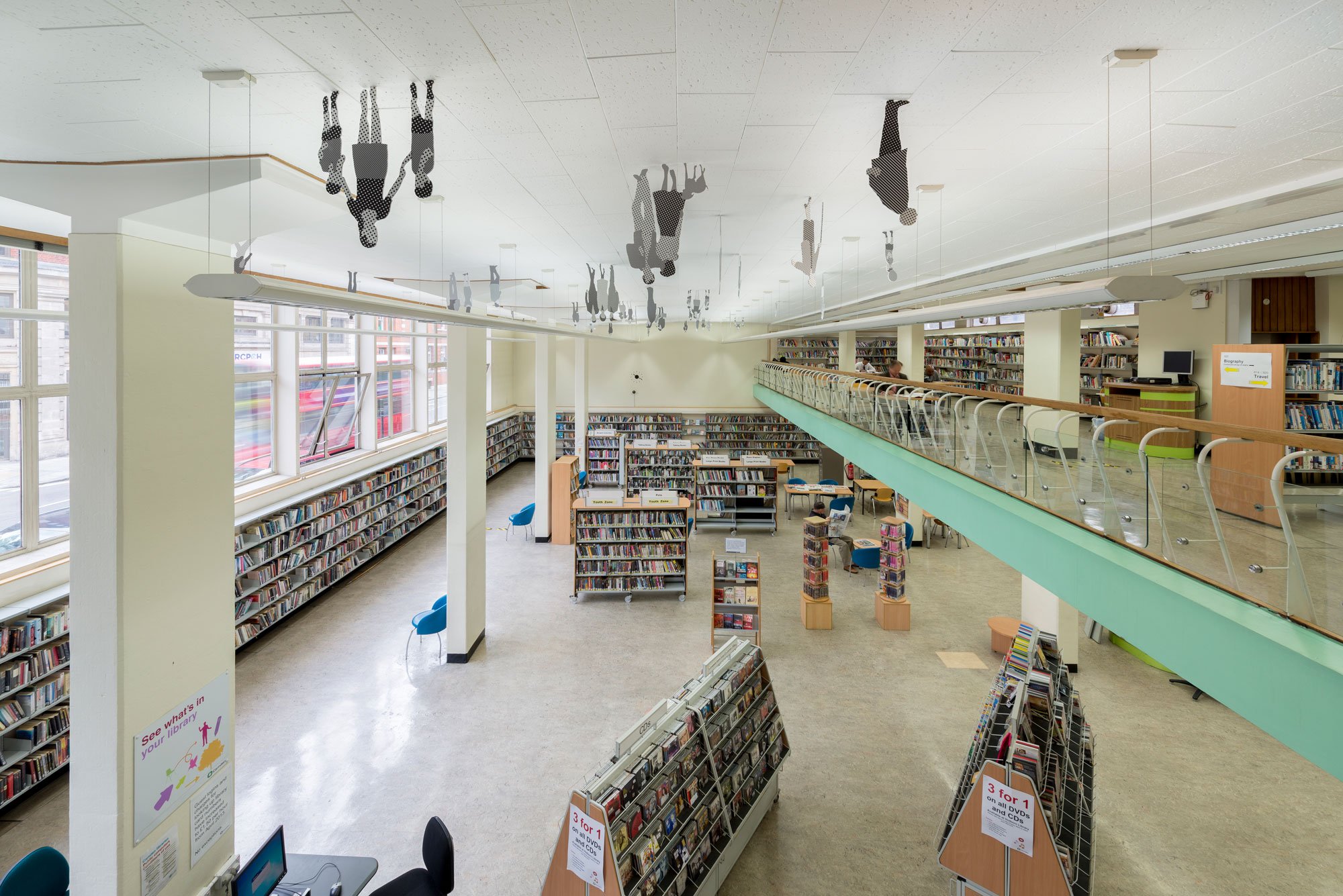
Image: On the ceiling of the main hall a set of characters based on the figures designed by Letraset for architects’ plans, part of Plot (2014). Photograph: Will Eckersley
Reanimating the auditorium
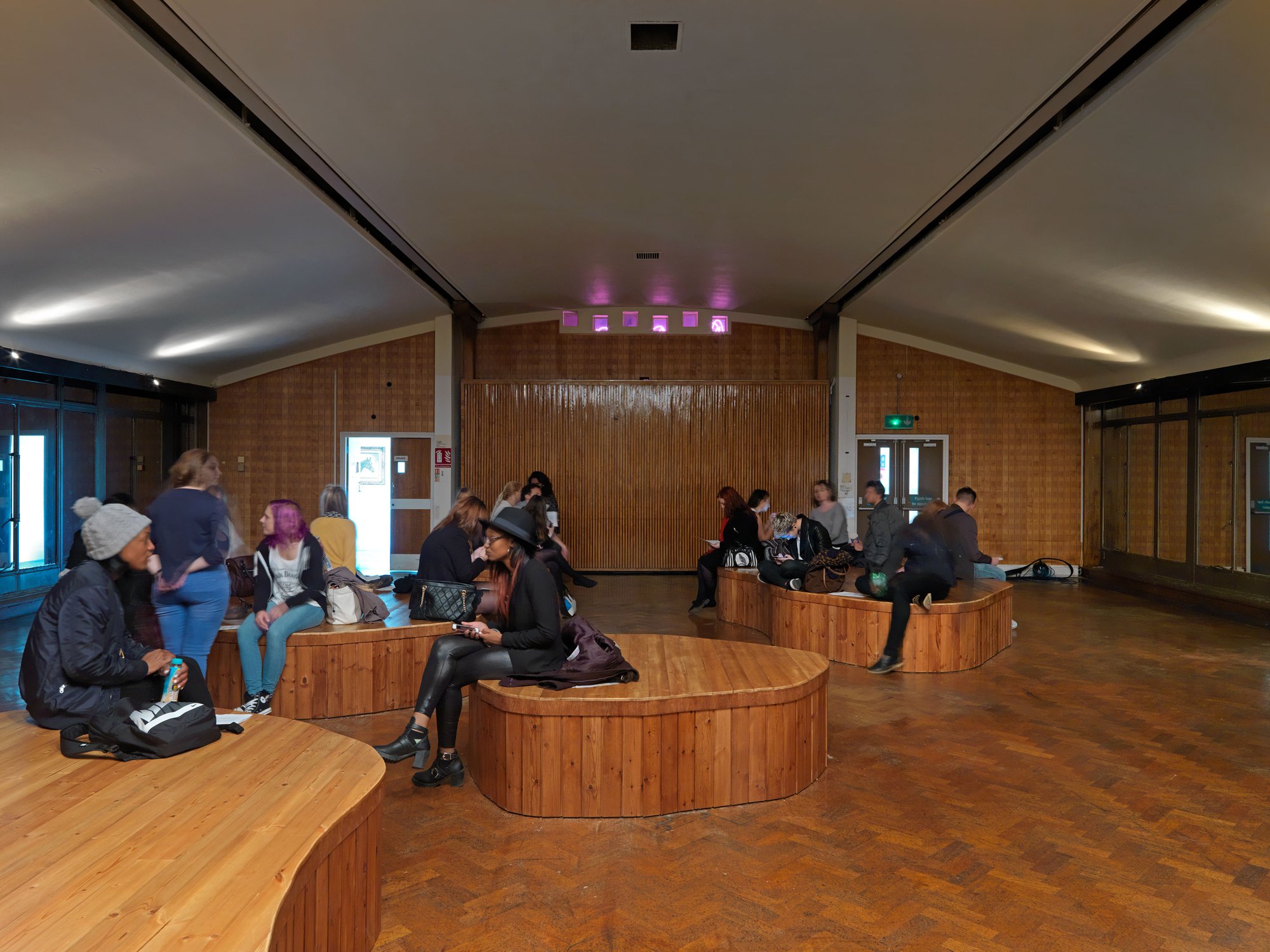
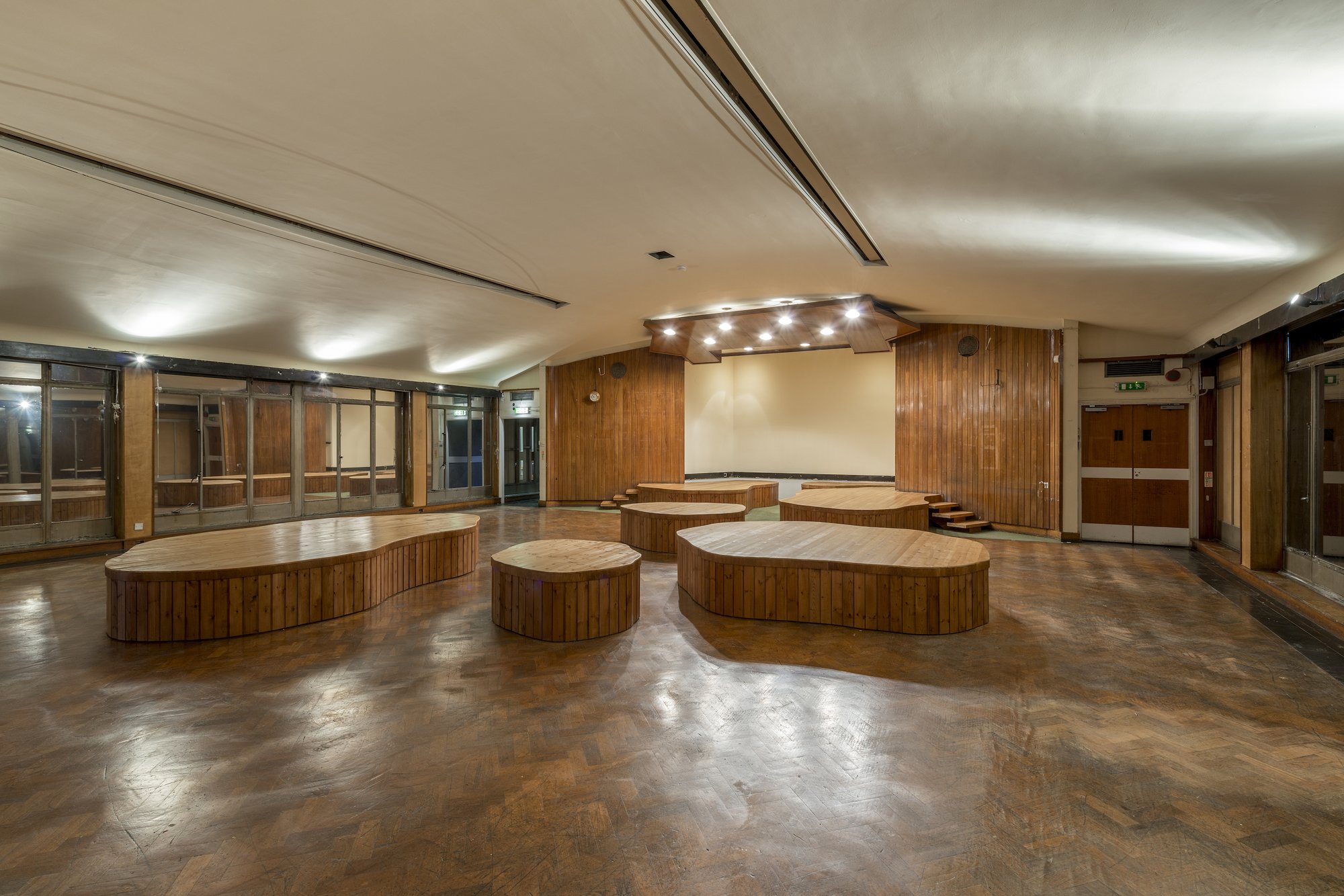
The space on the library's fourth floor, once home to performances and screenings, was inaccessible to the public before Plot was installed.
Damasceno reconstructed the space, turning its stage into islands that have broken from, but still flow together with, the original design, and invited the public to activate this space once more.
Standing on the stages, visitors could peek into the former projection booth and glimpse a series of pink neon sculptures based on José's line drawings. In an act familiar of the artist's dry humour, these stationary sculptures were also videoed live and available to view on a screen in the auditorium's backstage area.
Image: The stages and the neon sculptures on the fourth floor of Holborn Library, part of Plot (2014). Photograph: Marcus J Leith
Lilliputian footprints
The artist created a new way to navigate the building, mapping out routes for the visitor through architectural patterns and repetition as well as through the more literal use of footprints and figures in motion.
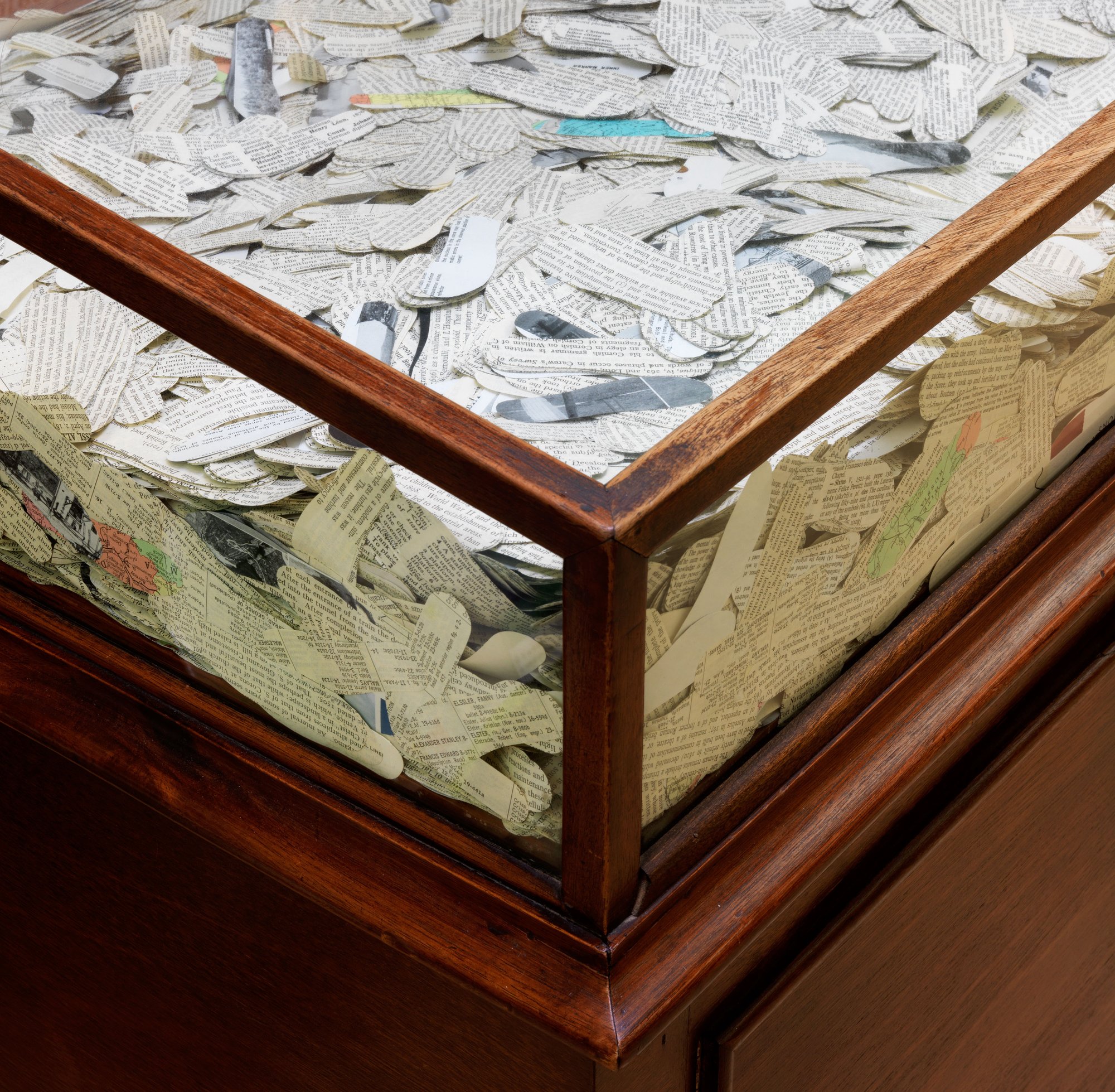
Thousands of tiny die-cut paper footprints filled both a vitrine on the ground floor and also, to differing levels, the windowsills of the windows that look out over the library's rear entrance on John's Mews.
Exemplifying the playfulness of this artist's work, the encyclopaediae sacrificed to this work were published in the year the library opened to the public.
Image: Paper cut-out Lilliputian footprints fill a vitrine, part of José Damasceno's Plot (2014). Photograph: Marcus J Leith
From Tipp-Ex to Vinyl
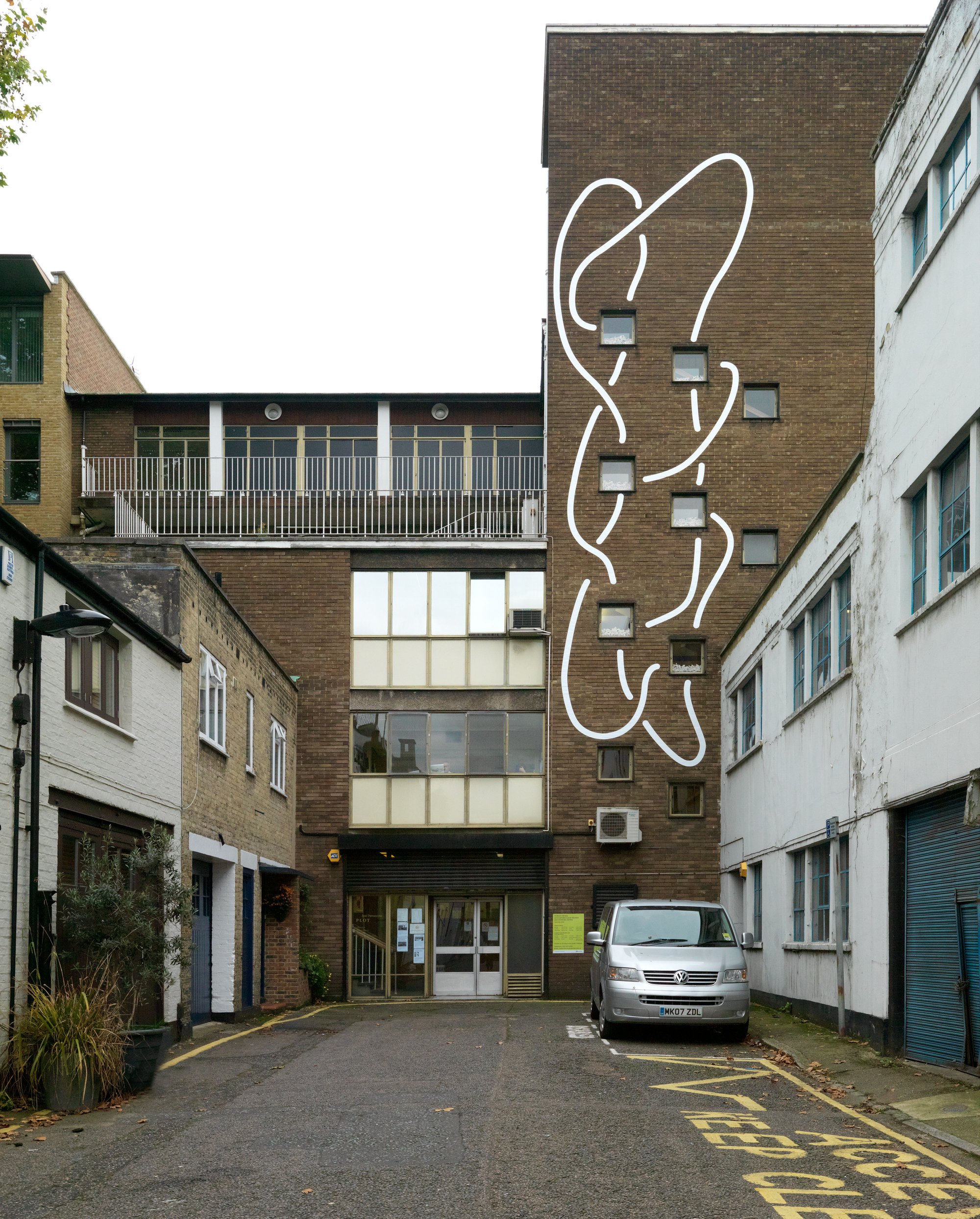
On the rear of the building is a design by Damasceno that links the windows he has filled with paper cut-out Lilliputian footprints.
This is an exact replica in vinyl of a drawing the artist made in Tipp-Ex on a photograph of the building, a methodology of print making for which the artist was already well known.
Image: Permanent vinyl work on the exterior of Holborn Library as seen from John's Mews, part of Plot (2014) Photograph: Marcus J Leith
A horse called Pascal
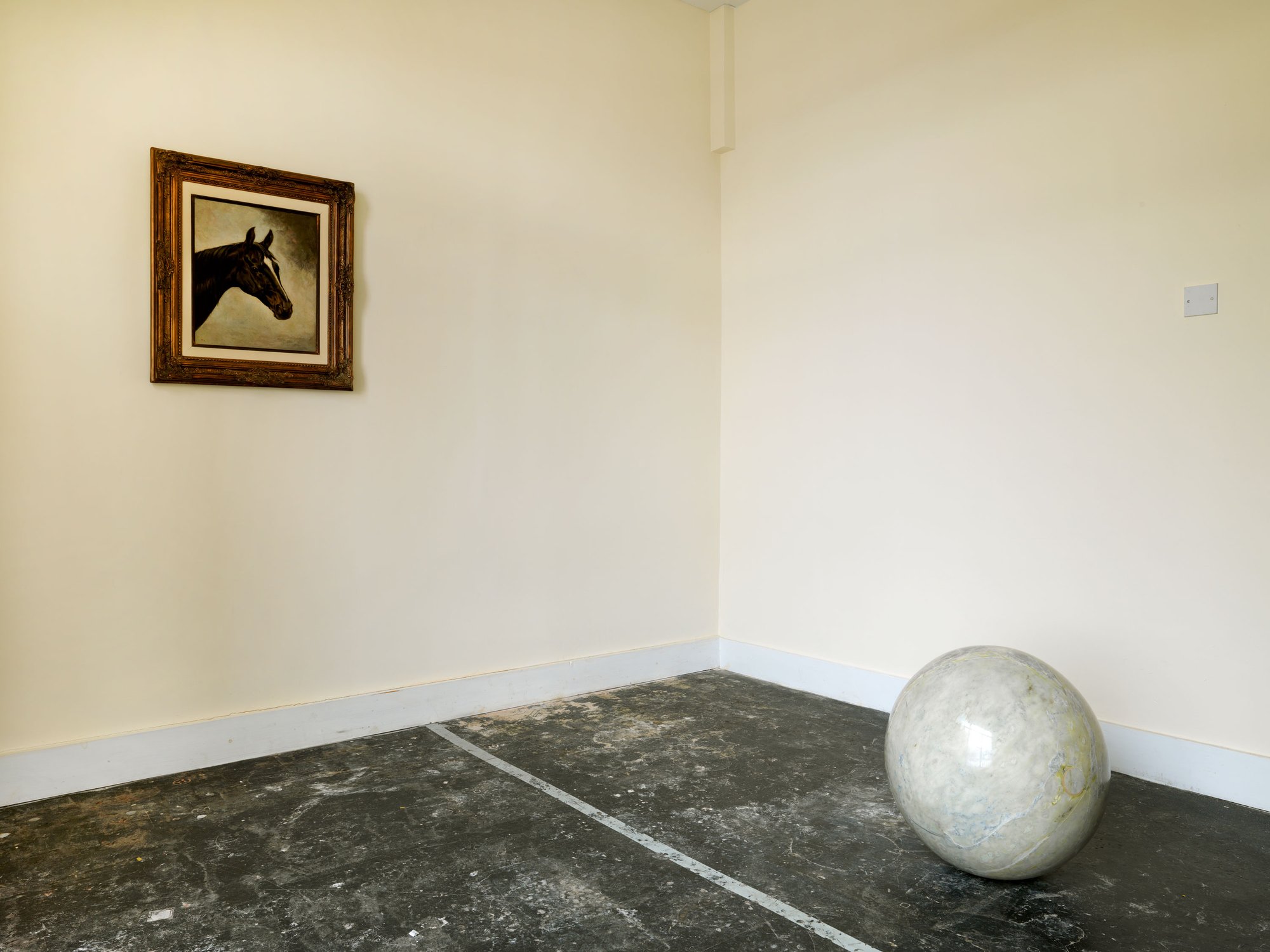
One block from my studio in Copacabana, Rio de Janeiro, there’s a peculiar space full of antiques shops, and I’ve been looking at an equestrian painting in one of them for two years. It has no signature and no date. I had it in mind to use this horse, because he’s very peculiar; he’s a [Blaise] Pascal-ian horse. He doesn’t know where he comes from or where he’s going to, and now he’s here in London. There’s a big marble sphere from Scotland [in the same room] for him to play with. – José Damasceno in an interview with Ria Hopkinson, The Art Newspaper, 16 October 2014
A found painting of a horse, that travelled with José Damasceno from Brazil to London, and marble sphere are to be found in a room marked 'Private' on the fourth floor of the library.
Image: Found painting and marble sphere, part of Plot (2014). Photograph: Marcus J Leith
Holborn Library
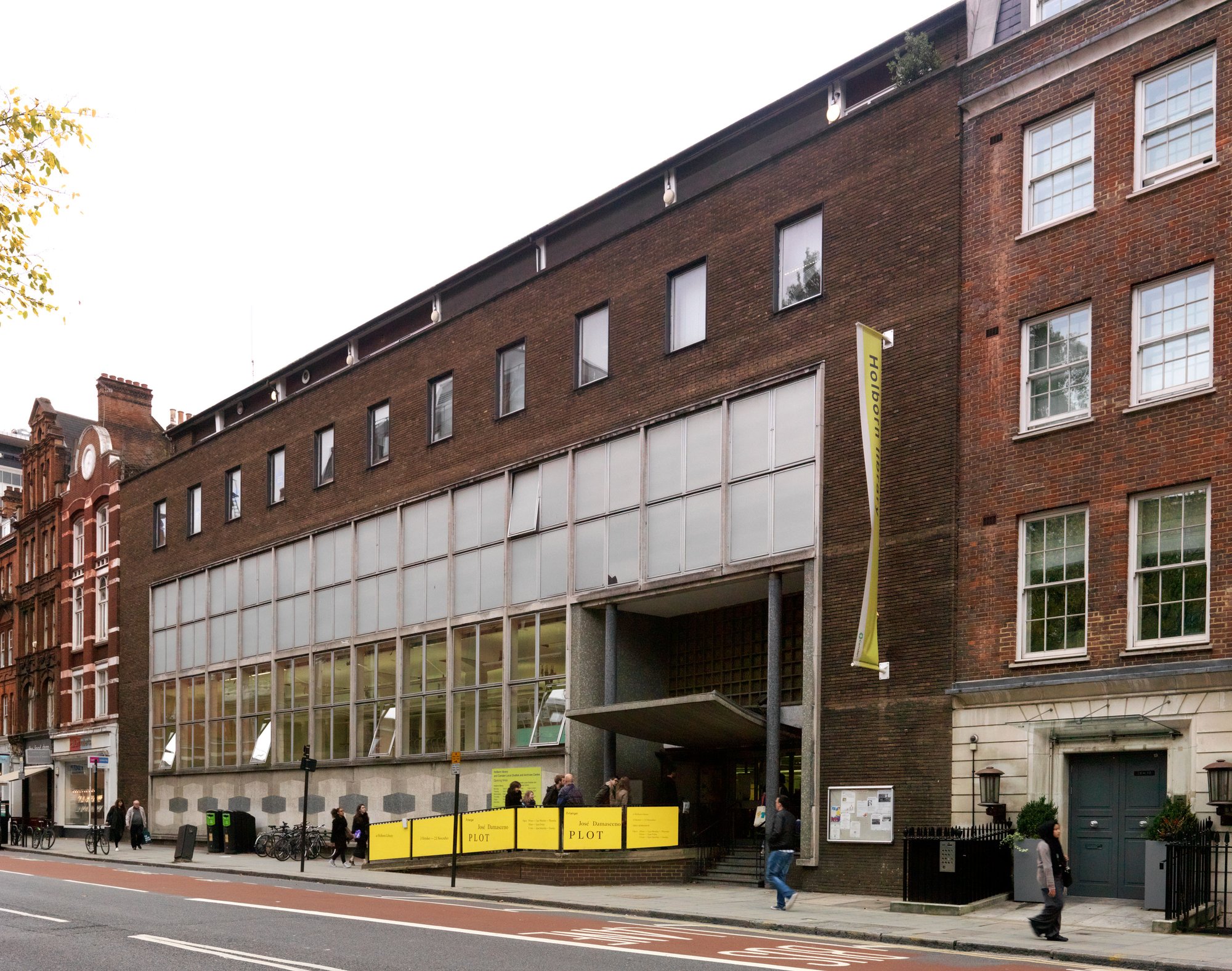
Holborn Library was opened by the Queen Mother in 1960, one of the first post-war multi-purpose library buildings.
Although the project itself, in its entirety, is now closed, three elements of the project have remained in the library. On the ceiling of the main hall a set of characters based on the figures designed by Letraset for architects’ plans remains in place, as does a large wall drawing on the rear of the building, visible from John's Mews. In addition, there is an artist's book and photographs which are available to look at on request in the Local Studies and Archives Centre.
Image: The exterior of Holborn Library as seen from the other side of Theobalds Road, Clerkenwell, London (2014). Photograph: Marcus J Leith
Audio: A series of talks on the themes of Plot
John Ó Maoilearca: Paraconsistent Perception. 1 hour 12 seconds
Audio: A series of talks on the themes of Plot
Running alongside Plot, a series of talks and performances were programmed inside of the Holborn Library to further expand the notions of reality and fiction explored by the project. Topics ranged from the connection between Plato and Father Dougal (from TV's Father Ted) to dancing in a library and an architectural response to the literary subjects posed by Damasceno.
- David Kohn, Plotting Spaces
- John Ó Maoilearca, Paraconsistent Perception (also featured left)
- José Damasceno in conversation with Professor Dawn Ades
Image: José Damasceno extends the floor of the library’s old lecture theatre and cinema into a series of stages, part of Plot (2014). Photograph: Marcus J Leith
José Damasceno
José Damasceno
José Damasceno was born in Rio de Janeiro in 1968, where he continues to live and work. The critic Gerardo Mosquera has described Damasceno's work as offering “a succession of adventures and surprises”. His versatile approach encompasses sculpture, drawing and collage, creating a rich interaction between these various methods which informs the scope of his installations. This diversity is often underpinned by Damasceno’s sharp and idiosyncratic sense of play, which is central to the experience of his work. His use of humour and eclecticism is also evocative of such wide-ranging influences as the Brazilian Neo-Concretists and the Surrealists.
In 2007, Damasceno represented Brazil at the Venice Biennale and, in 2008, was invited to create installations for various public spaces in Madrid’s Museo Reina Sofía, presented as the exhibition Coordenadas y Apariciones.
Plot is the artist’s first major solo show in the UK, following his 2010 exhibition Integrated Circuit, which took place at the Thomas Dane Gallery. International exhibitions of Damasceno’s work include those at the Centro Cultural São Paulo (2012), the Sydney Biennale (2007), the Project, New York (2007), the Museu de Arte Moderna de São Paulo (2005), the Museum of Contemporary Art, Chicago (2004), and at Culturgest, Porto (2003).
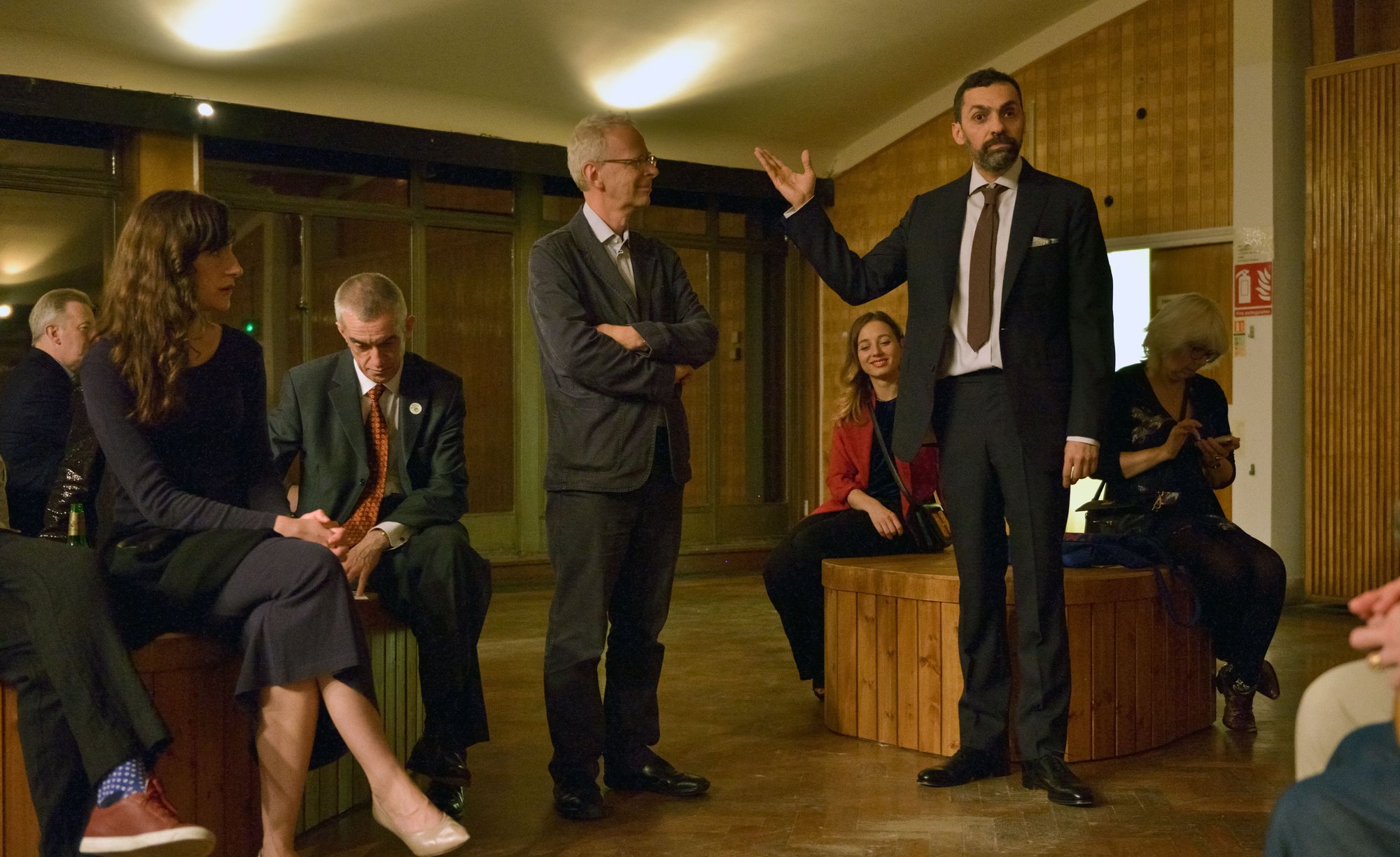
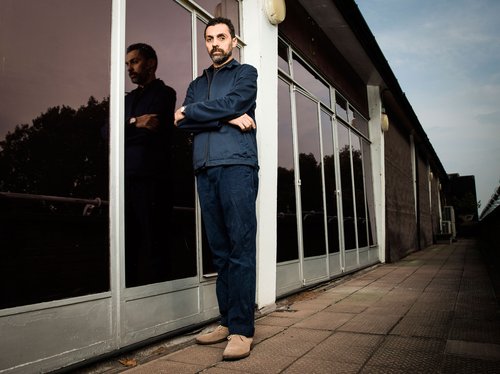
Images: (left) Artangel co-director James Lingwood and José Damasceno (ro the right) at the opening of Plot (2014). Photograph: Ewa Herzog; (above) José Damasceno standing on the balcony on the 4th floor of Holborn Library during production of Plot (2014). Photograph: Tom Oldham
Who made this possible?
Credits
Commissioned and produced by Artangel with the support of the José Damasceno Supporters' Circle and The Henry Moore Foundation and in partnership with London Borough of Camden. Artangel is generously supported by Arts Council England and the private patronage of the Artangel International Circle, Special Angels and The Company of Angels. The Public Programme for Plot was presented in association with the Swedenborg Society.