Audio: The Hope Six Demolition Project
The Wheel | 5 minutes 38 seconds
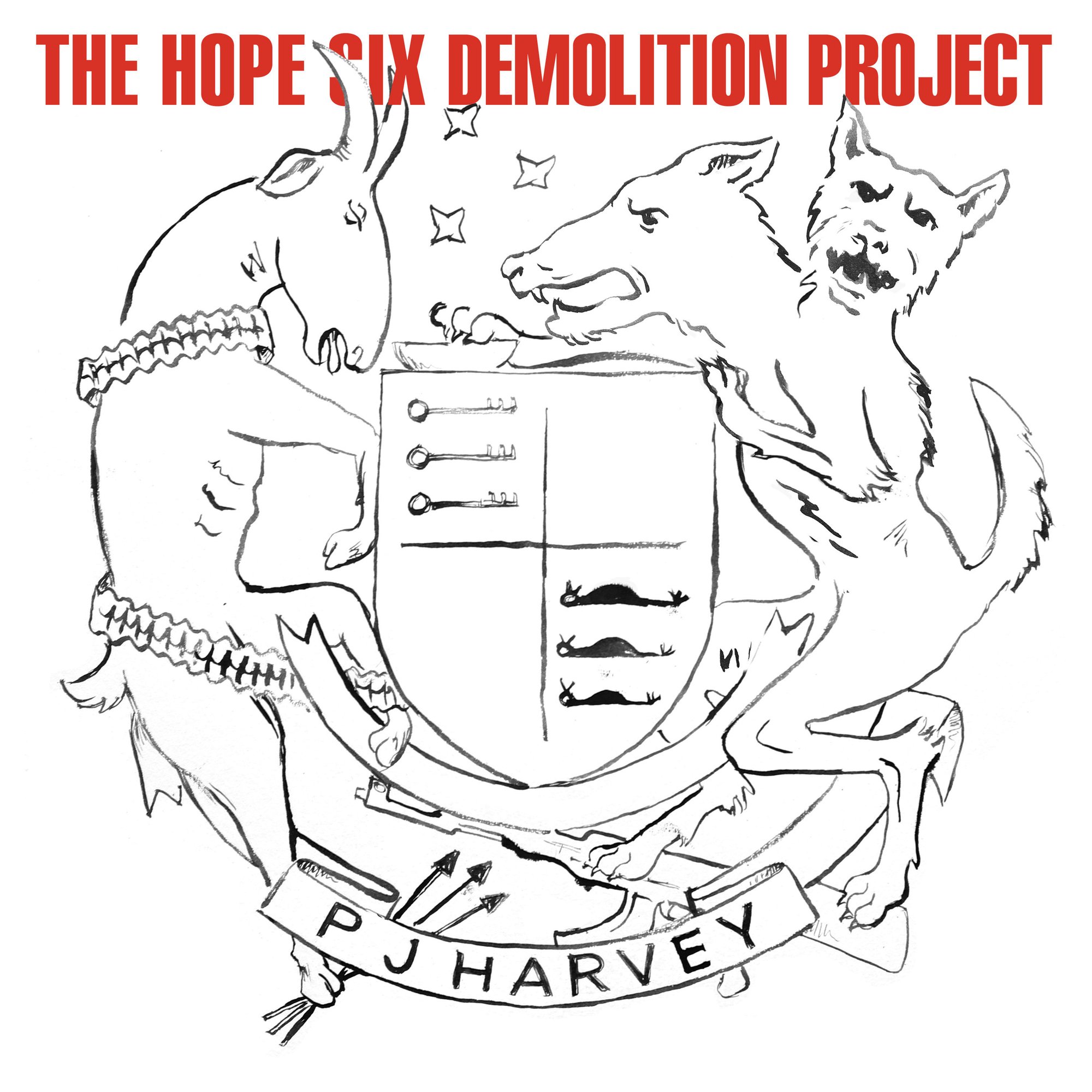
The Hope Six Demolition Project
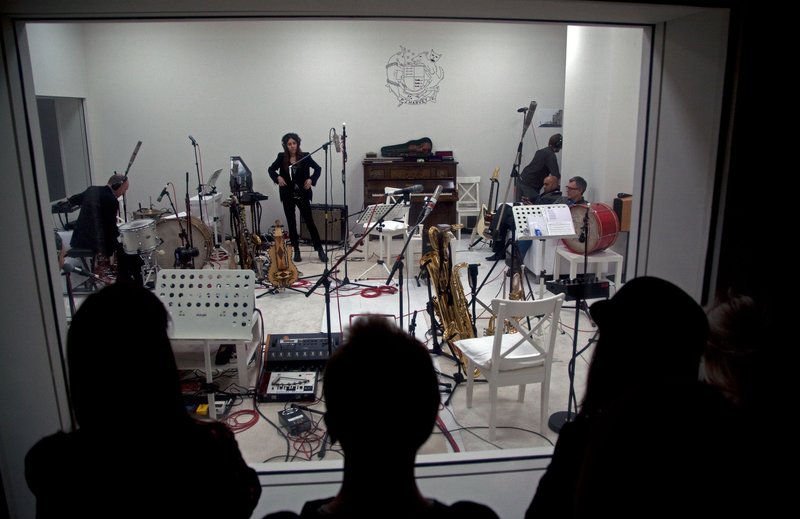
Harvey's ninth album and her first UK number one album The Hope Six Demolition Project was released 15 April 2016. Every single track was recorded at Somerset House during Recording in Progress in front of a visiting audience.
The framing gave Harvey license to breach the four walls of her own perspectives and scrutinise her music as if from afar. The songs are intricate and embellished, employing the same palette of wailing riffs and chanted vocals that have been a feature of much of her post-2000s output. But they never chase their own tails or fully inhabit a reality of their own creation. – Ed Power, The Quietus
The Wheel, left, is also available to stream on Soundcloud, alongside selected other tracks from The Hope Six Demolition Project.
More information on purchasing the album.
Image: Album cover artwork © 2016 Island Records, a division of Universal Music Operations Limited
You just go with the flow of what’s happening in the room that day, and I hope our visitors will too. I think what you will see is a process that has to be gone through. You have to go through dull moments to get to the goods. – PJ Harvey
Making Recording in Progress
PJ Harvey in conversation with Michael Morris
Michael Morris: Polly, I’d like to begin by asking you about the importance of place in your past albums and the role of place, both in the writing of your songs and where you choose to record them.
PJ Harvey: In terms of writing songs I’ve learnt over the years that it doesn’t really matter where I am. I wrote almost all of White Chalk, which is largely about the Dorset landscape, when I was living in LA at the top of a skyscraper amongst hard lines and glass. Maybe I was pulled back to the landscape because I was away from it. I don’t think that for writing it actually matters, because at that stage I’m exploring my imagination, and that can be anywhere. You carry that with you.
MM: I suspect that the creative process is something that emerges from within. So that makes sense to me, that the landscape where you grew up is inside you, it’s part of your inner world. So it doesn’t really matter if you’re in Iceland or in LA or in New York – you take the landscape with you.
PJH: Exactly...
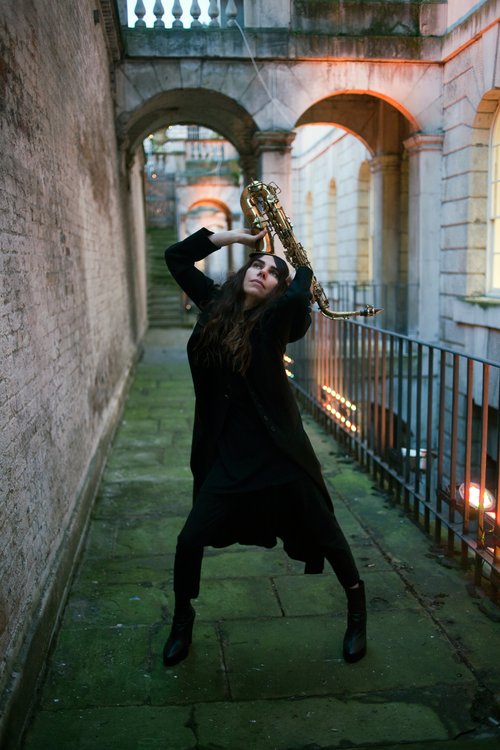
PJ Harvey
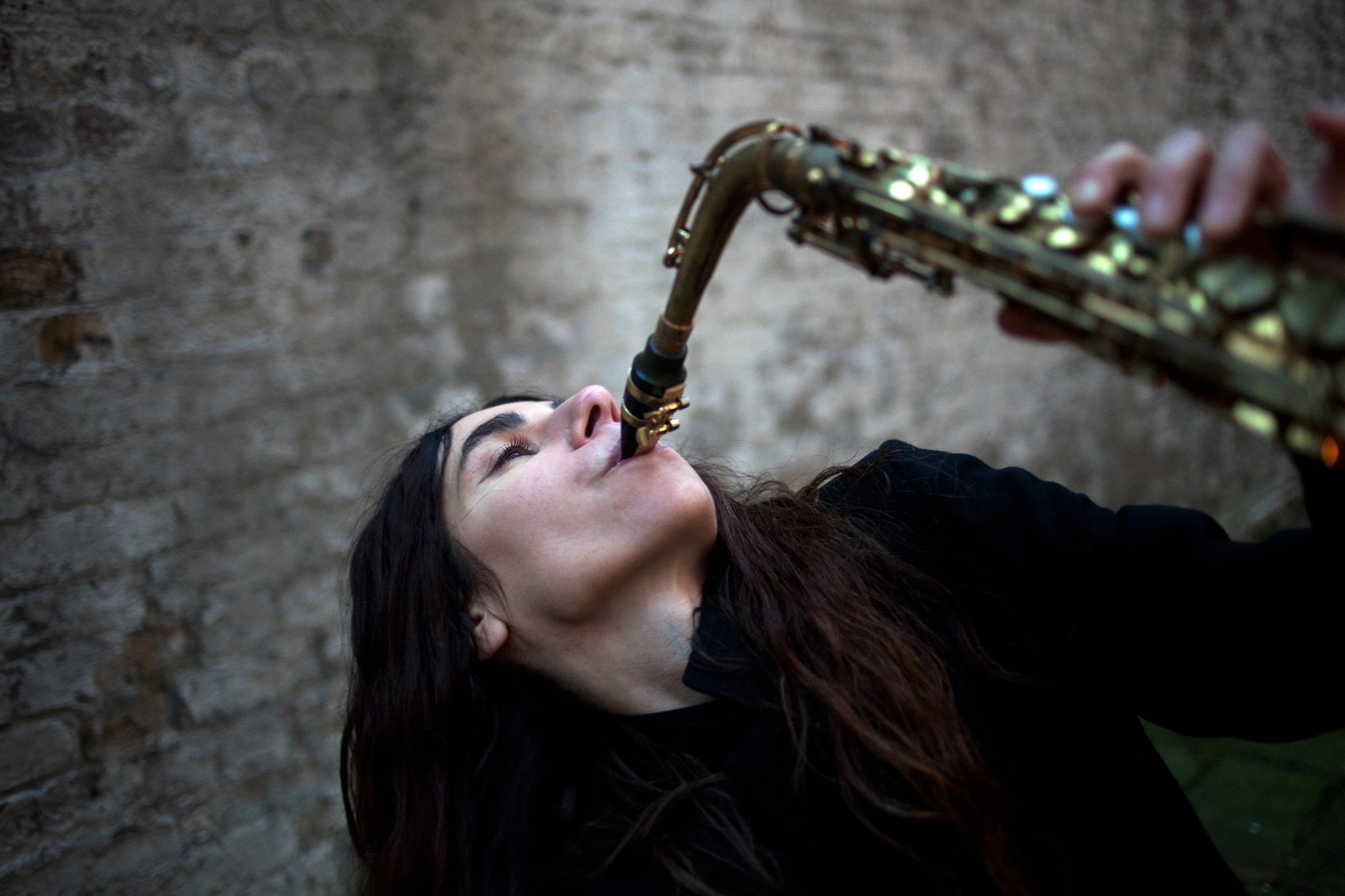
After completing an art foundation course, Polly Jean Harvey was awarded a place to study sculpture at Central Saint Martins College of Art and Design. At the very same time she was offered a record deal.
She decided in favour of music and her band – PJ Harvey – released a remarkable debut album, Dry, in 1992. It was acclaimed worldwide and in the US, Rolling Stone named Harvey “Best Songwriter” and “Best New Female Singer”. The only artist to have twice won the Mercury Music Prize, for Stories From The City, Stories From The Sea in 2001 and Let England Shake in 2011, after eight studio album releases, Harvey was awarded an MBE for services to music in 2013.
Long admired for her powerful lyrics, from the personal to the political, more recently Harvey has become known for her poetry, delivering her first public reading at the British Library in 2013. Though she never took up her place at Saint Martins, she continues to paint, draw and sculpt. Recording in Progress, conceived in collaboration with Artangel and Somerset House, marks a moment where these occupations collide and the process of album making becomes a public art installation.
Images: Polly Jean Harvey at Somerset House, 2015. Photographs: Seamus Murphy
Production Credits
Artangel
James Lingwood & Michael Morris, Co-Directors
Cressida Day, Managing Director
Anna Larkin, Head of Communications
Nick Chapman, Communications Coordinator
Charmian Griffin, Producer, Digital
Maria Caroll, Head of Development
Danielle Sharma, Development Manager
Somerset House
Jonathan Reekie, Director
Charlotte Nimmo, Head of Live Events
Molly Rigg, Lead Project Manager, Live Events
Josephine Rodrigues, Head of PR
Francesca Hughes, Press Officer
Stephen Doherty, Director of Visitor Communications
Kirstin Hay, Marketing Officer
Mick Figg, Property Services Manager
Studio
Something & Son, Design
The White Wall Company, Build
Bowers & Wilkins, Loudspeaker supplier
Tickle Studios Ltd, Equipment installation
Charcoalblue, Acoustic consultants
Graphic design by Julia
Recording engineer: Rob Kirwan.
Assistant engineer: Cecil.
Musicians
Flood
John Parish
Jean-Marc Butty
Terry Edwards
Enrico Gabrielli
Mick Harvey
Alain Johannes
Kenrick Rowe
Mike Smith
Alessandro “Asso” Stefana
Click here to read their biographies
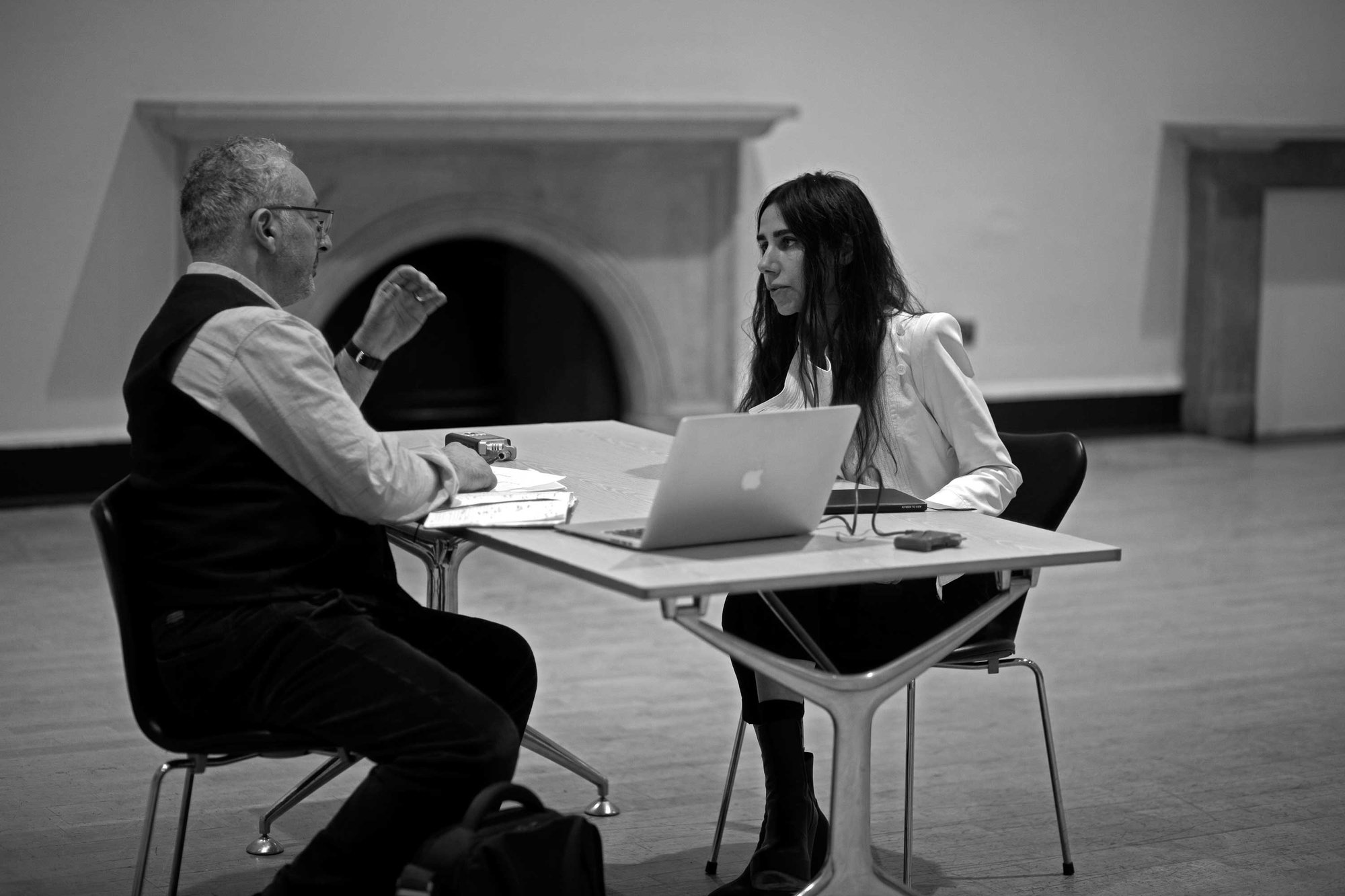
Image: Michael Morris and PJ Harvey discuss the forthcoming project inside the space at Somerset House (2014). Photograph: Seamus Murphy
PJ Harvey’s Artangel project is a portrait, unedited and in real time, of its living subject behind the glass, lost in the music, self-absorbed, sometimes bored, coming in and out of focus, suddenly getting animated. – Adrian Searle, The Guardian
Selected Press
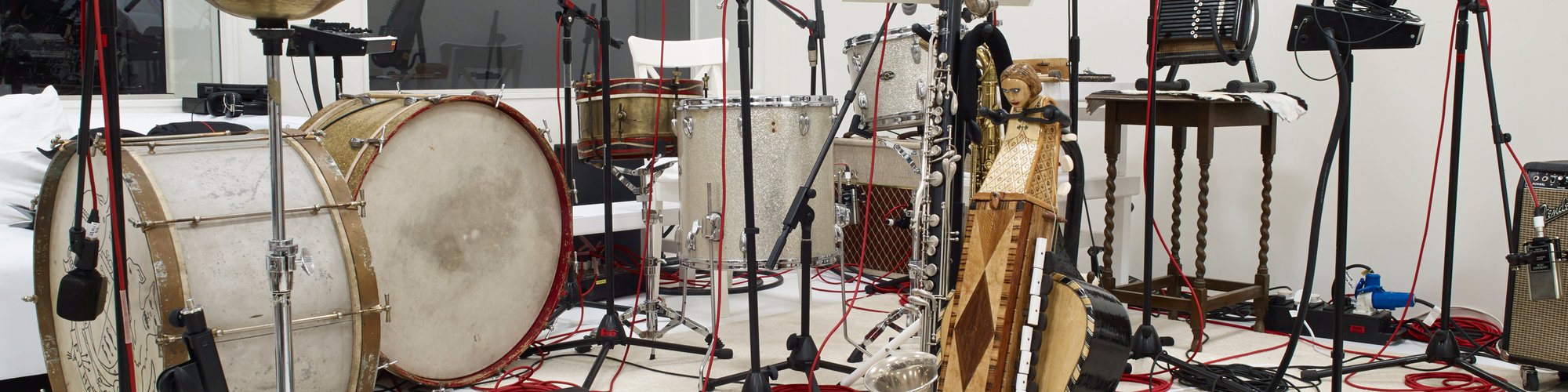
As a recording of the opening lyrics plays out across the gleaming white studio, Johnson begins to play the violin. “At the refreshment stand / a boy throws out his hand” goes the song. “As if to feed the starlings / but really he throws nothing.” Moments later, he is joined by Harvey herself on the violin, an instrument she later abandons in favour of a folk-favourite, the hurdy gurdy, while Parish plays the accordion and Edwards plays both the harmonica and the flute. – Hannah Ellis-Petersen, The Guardian, 16 January 2015
I feel as if we've witnessed an unspoken understanding and camaraderie between the long-term friends and collaborators. When we buy music, there is a feeling of inevitability - that the songs were always meant to sound like that. Recording In Progress reveals all the tiny decisions and uncertainties that lie behind every fragment of the finished product - the forks in the road. There has been much speculation about how the musicians would behave differently or even perform differently when under observation but we do not see much evidence of self-consciousness creeping into the performances apart from a wry aside from Flood that "that was one of the most exciting moments in recording history!" – Tim Fox, The Quietus, 19 January, 2015
Leaving the building I find myself humming “The Revolving Wheel”: At first it escapes subconsciously but then I find myself purposefully repeating it, wanting to prolong the experience. I can’t remember it any more. There is a strong chance of that track making it onto the new record but I’ll never hear what I heard today again because I witnessed something passing in real time. To PJ Harvey: “The best part of any creation is the creating itself. That is when it’s most vital, most exciting.” PJ Harvey has always been vital. The mark she leaves on this building is vital. The mark this building has left on us has been, will be and is vital. – Lauren Down, The Line Of Best Fit, 17 February 2015
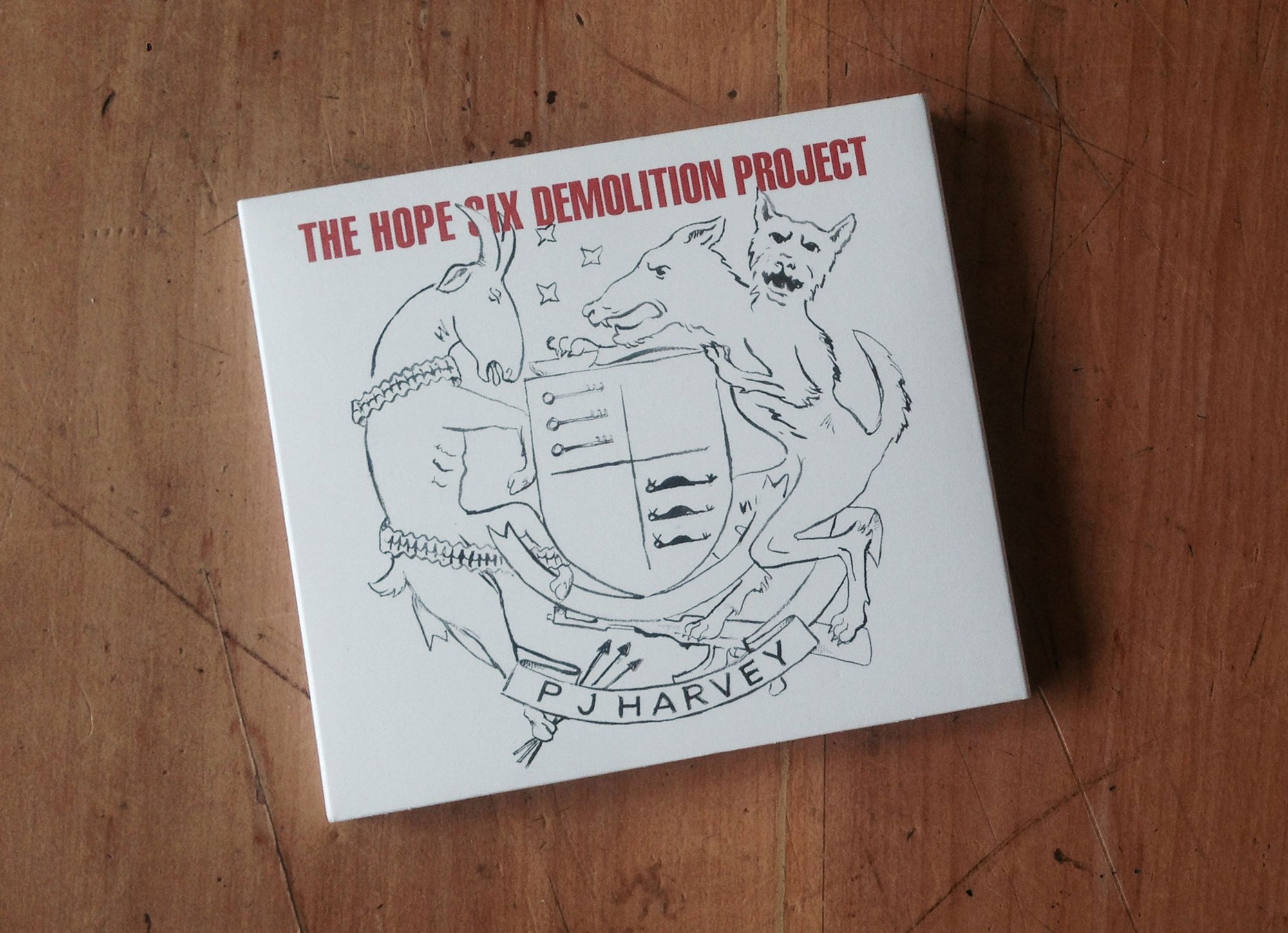
The Hope Six Demolition Project
Audio CD £11.99 and LP £21.99 from Rough Trade
Unswervingly political — Jess Denham, The Independent
PJ Harvey's ninth album was inspired by her travels to Kosovo, Afghanistan and Washington DC and forms a critique of current US government policy. Written over a two-year period and then recorded over several weeks at Somerset House as Artangel project Recording in Progress, its eleven tracks include The Wheel and The Community Of Hope.
The limited deluxe CD edition is housed in a six-panel digipak with Munken paper sleeve and a twelve-page booklet. The LP is heavyweight vinyl housed in a gatefold sleeve with a poster and download link included.
Released: 15 April 2016
Label: Island Records, a division of Universal Music Operations Limited under exclusive licence for the United States to Vagrant Records
Harvey assumes the role of a musical war correspondent, demanding immersion into a challenging theme underscored by powerful lyrical intensity. Unswervingly political, the originality comes from her position as an observer rather than a Dylan-style protester. Her words, here as visceral as fans have come to expect, could at times be mistaken for a Wilfred Owen poem. – Jess Denham, Independent
Selected Press
‘River Anacostia’ emerges, after a delicately soulful prelude of humming, with a twitchy keyboard refrain and the curiously unsettling sound of the variophon, an electronic wind instrument. ‘The Ministry Of Social Affairs’ possesses a shuffling processional percussive core out of which ascends some pretty righteous saxophone, initially lyrical but quickly enraged. – Gareth James, Clash Magazine, 26 April 2016
It involves thumping drums (heavy on the tom-toms), distorted guitars, massed Bad Seeds-like backing vocals, big, hook-laden choruses and really sharp, punchily effective tunes; it’s a long time since a PJ Harvey album felt as abundant in earworm melodies as this. – Alexis Petridis, The Guardian, 14 April 2016
After the eerie high registers of Let England Shake and 2007’s haunted White Chalk, it’s bracing to hear Harvey almost back to using her voice to its fullest range. You get the sense that she’s never going to unleash ze monsta again, but she switches between full-blooded confrontation, evil cunning, haunted falsetto, and forlorn laments, bringing great zeal to her often affectless choice of language. – Laura Snapes, Pitchfork, 14 April 2016
Buy / Stream A Dog Called Money
A Dog Called Money, directed by Seamus Murphy is available for EST and TVOD in the UK across the majority of platforms including Amazon, Mubi and Apple iTunes.
Photographer and filmmaker Seamus Murphy explores the creative inspiration behind PJ Harvey’s album The Hope Six Demolition Project, filming her during the recording at Somerset House and charting their travels together in Afghanistan, Kosovo and the U.S.
- Feature Running Time: 90 minutes
- Certificate: 15
- Colour/PAL
- Language: English, English subtitles
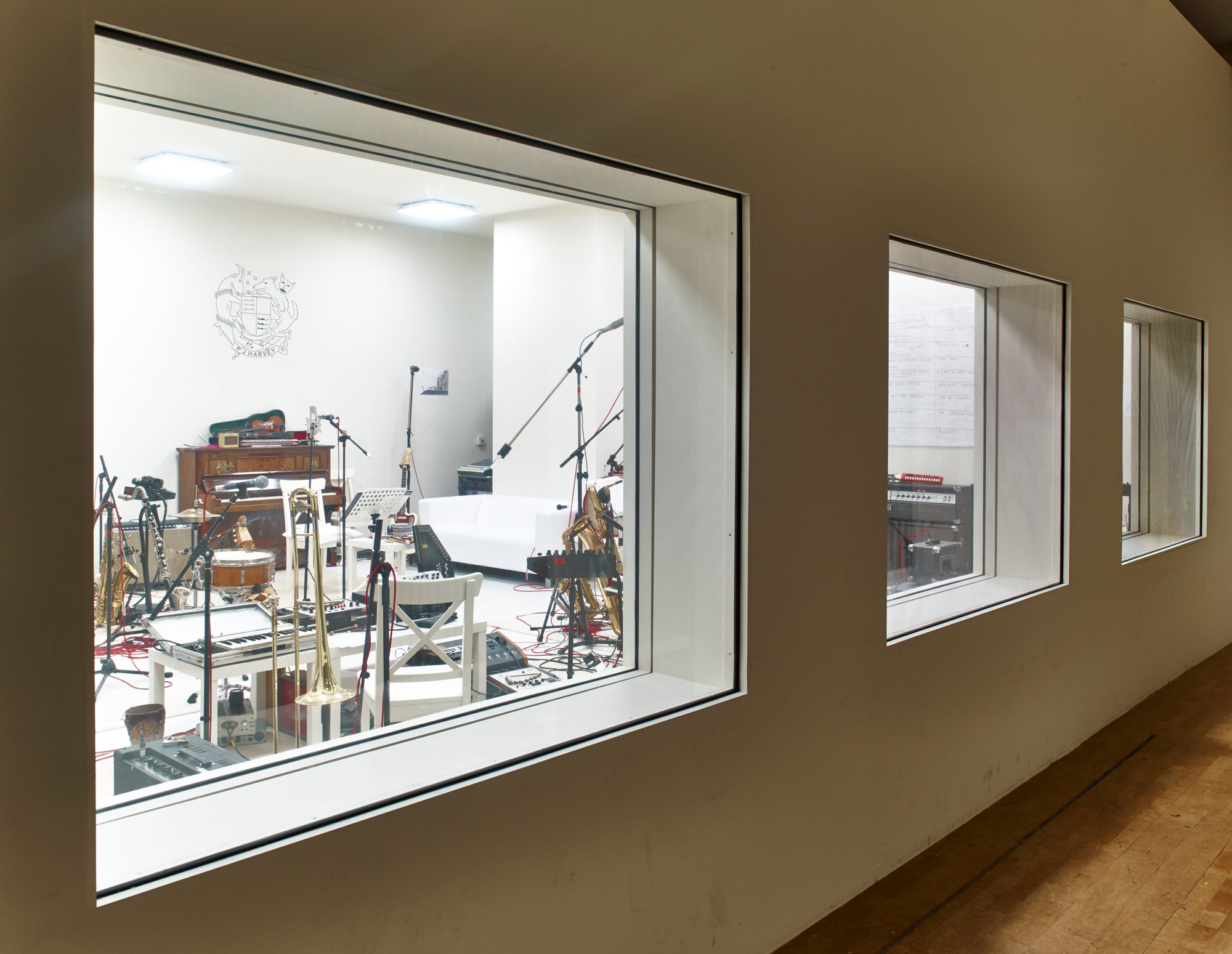
Image: The view into the recording studio of PJ Harvey, Recording in Progress (2015). Photograph: Stephen White
Who made this possible?
Credits
Commissioned and produced by Artangel and Somerset House with thanks to ATC Management and Island Records.
Artangel is generously supported by Arts Council England and the private patronage of the Artangel International Circle, Special Angels and The Company of Angels.