
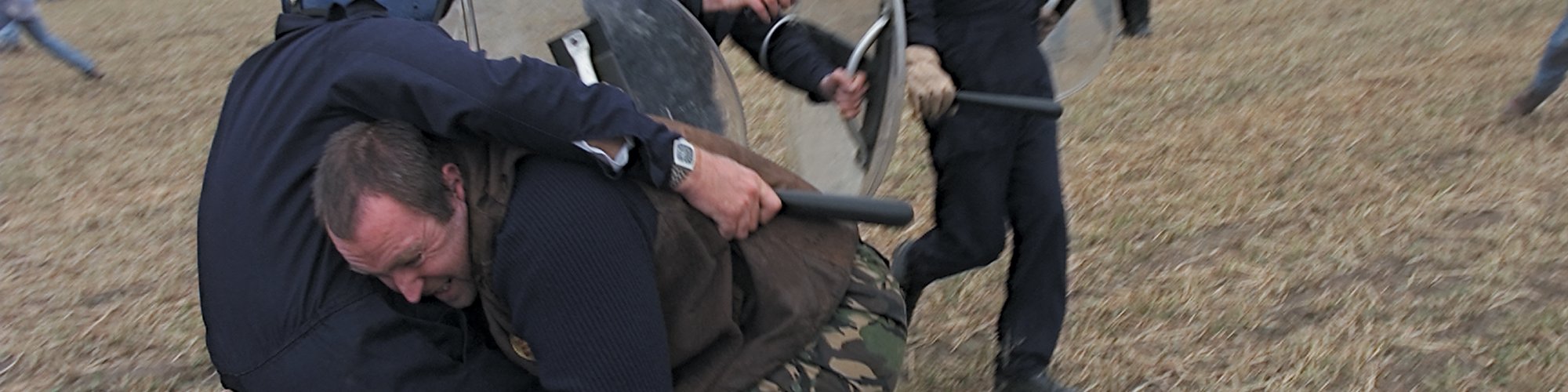
Project presentations
Orgreave, Yorkshire
Verkligheten
Part of Filmkvällar på Verkligheten. After the screening, Simon Gran Danielsson and Johan Örestig Kling will hold a discussion about the film with the audience.
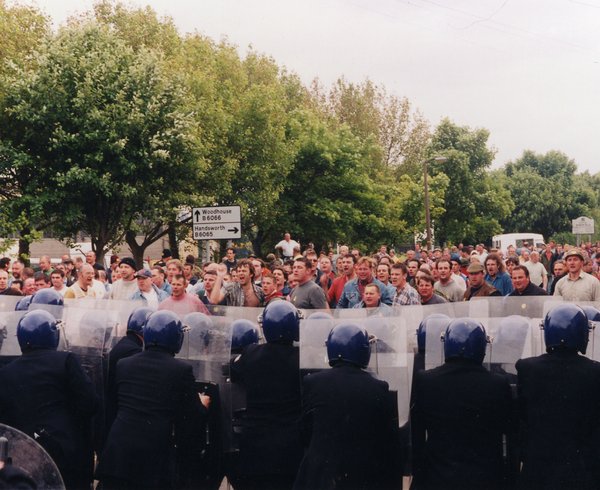
In The Artangel Collection
The Battle of Orgreave Archive (An Injury to One is an Injury to All) is in The Artangel Collection. Since its initial presentation, the work has been re-presented several times, including installations at John Hansard Gallery in Southampton in 2013, at Modern Art Oxford in the spring of 2015 and at Tate Britain in the summer of 2015.
Borrowing the Collection work
The Battle of Orgreave can be borrowed for presentations within the UK and internationally. Please use the form to get in touch about taking the work out on loan.
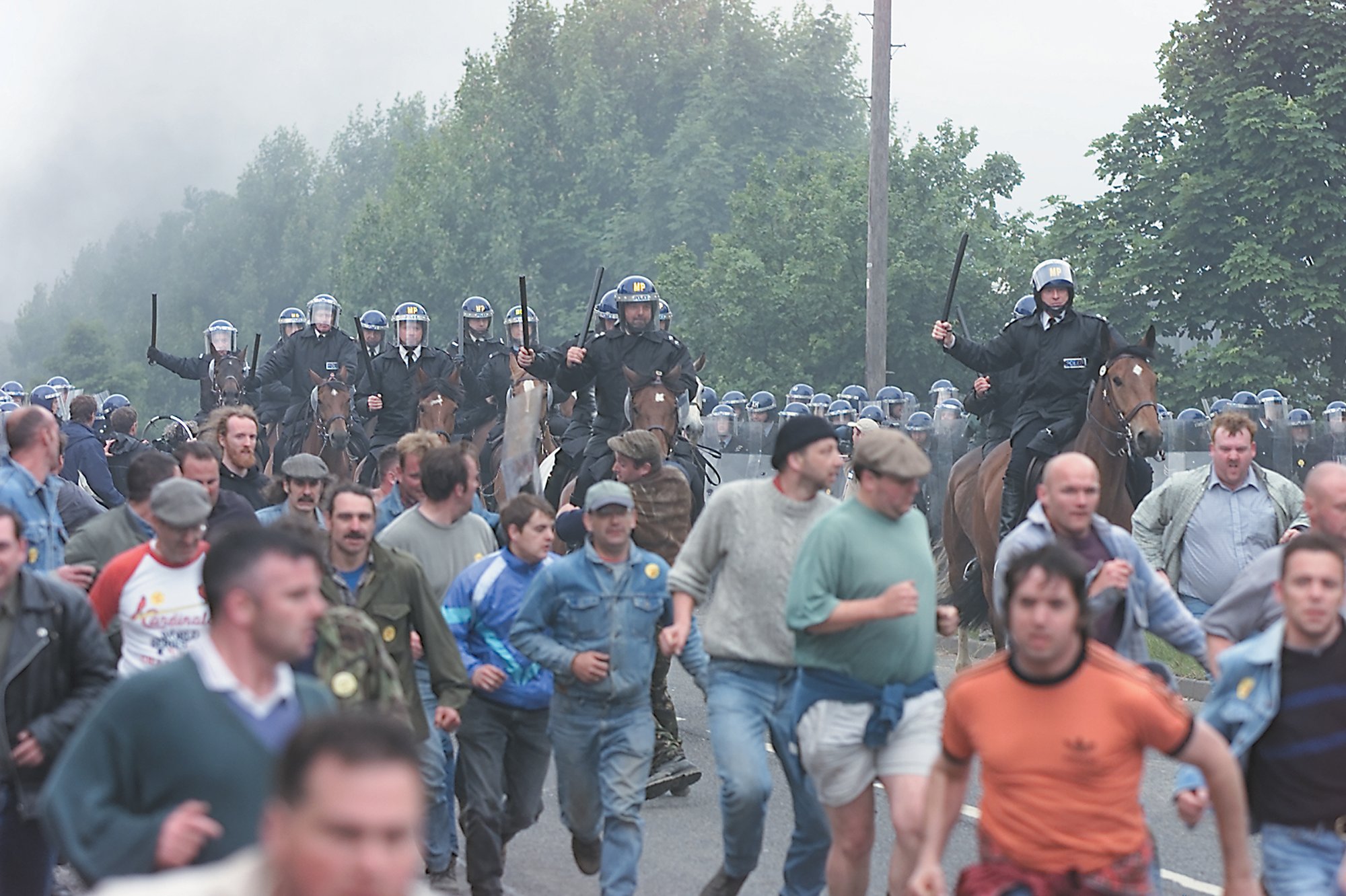
The English Civil War: Part II
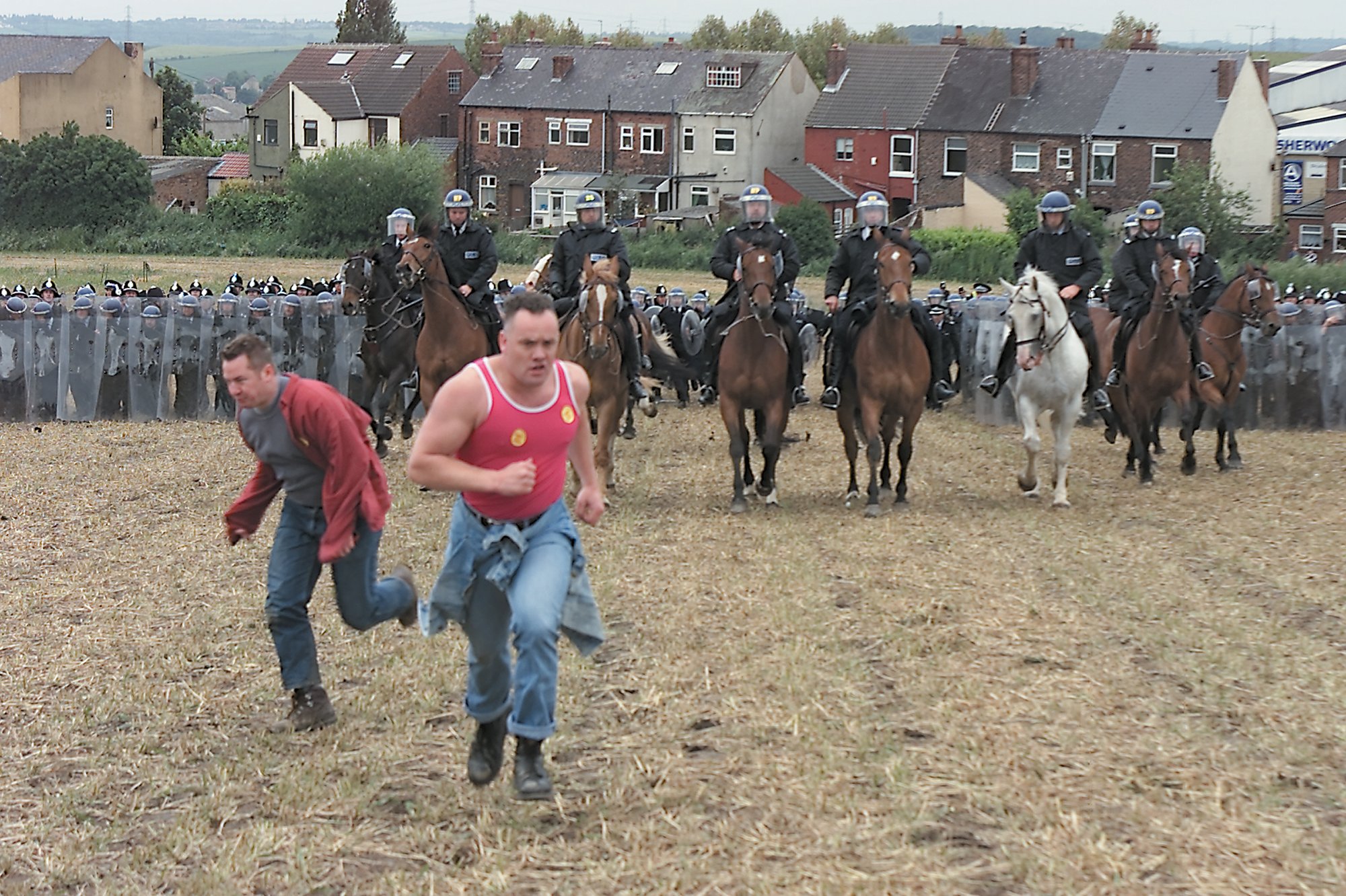
On 18 June 1984 I was watching the evening news and saw footage of a picket at the Orgreave coking plant in South Yorkshire in which thousands of men were chased up a field by mounted police. It seemed a civil war between the North and the South of the country was taking place in all but name. The image of this pursuit up the hill stuck in my mind and for years I wanted to find out what exactly happened on that day with a view to re-enacting or commemorating it in some way. It would not be an exaggeration to say that the strike, like a civil war, had a traumatically divisive effect at all levels of life in the UK. Families were torn apart because of divided loyalties, the union movement was split on its willingness to support the National Union of Mineworkers, the print media especially contributed to the polarization of the arguments to the point where there appeared to be little space for a middle ground. So in all but name it became an ideological and industrial battle between the two sections of British* society.
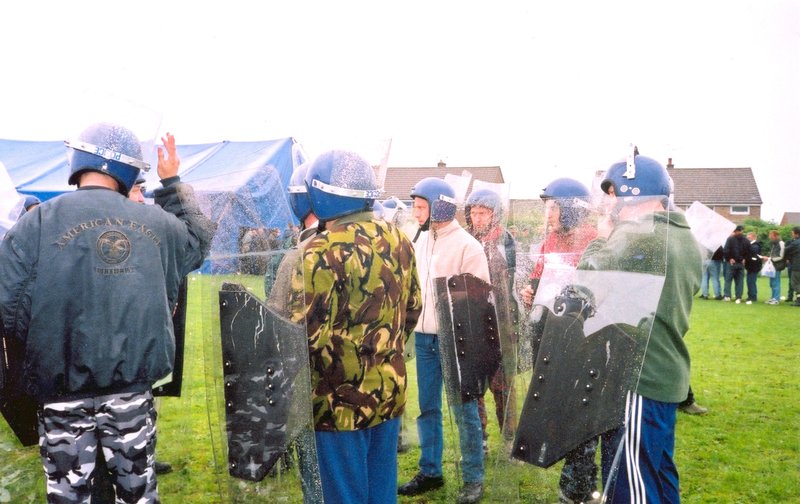
When I started to undertake research, the consequences of the confrontation took on a much larger historical perspective. It was a day that had been anticipated and planned for by the then government, even before it came to power. After over a year of archive reading, listening and interviewing many of those involved the re-enactment finally did take place on, or as close to as possible, the original site, with over 800 participants.
Many of these participants were former miners (and a few former policemen) who were reliving events from 1984 that they themselves took part in. The rest were members of Battle re-enactment societies from all over the country.
I wanted to involve members of these societies for mainly two reasons: first of all, they are well trained in recreating combat and in obeying orders. More importantly, I wanted the re-enactment of The Battle of Orgreave to become part of the lineage of decisive battles in English History.
I was also interested in the term ‘living history’ that is frequently used in relation to re-enactments, and I thought it would be interesting for re-enactors to work alongside veterans of a recent confrontation, who are an embodiment of the term.
Also as an artist I was interested in how far an idea could be taken, especially one that is on the face of it a contradiction in terms, ‘a recreation of something that was essentially chaos’.
I would never have undertaken the project if people locally felt it was unnecessary or in poor taste. As it was, we encountered support from the outset because there seemed to be an instinctive understanding of what the re-enactment was about. I was not interested in a nostalgic interpretation of the strike.
Over a thousand people were involved in the project, either through taking part, filming or helping with the research. I would personally like to thank everyone who has shown faith in the project or was at least willing to give it a go.
*I apologise for the fact that the title The Battle of Orgreave does not acknowledge the miners in Scotland and Wales who took part in the strike but it was a title that seemed to stick, even when I first thought of the re-enactment eight years ago.
– Jeremy Deller, 2002
This is an edited version of the foreword from Jeremy Deller’s 2002 book The English Civil War: Part II, published by Artangel.
An Interview with David Douglass
David Douglass is Hatfield Branch Delegate for the National Union of Mineworkers
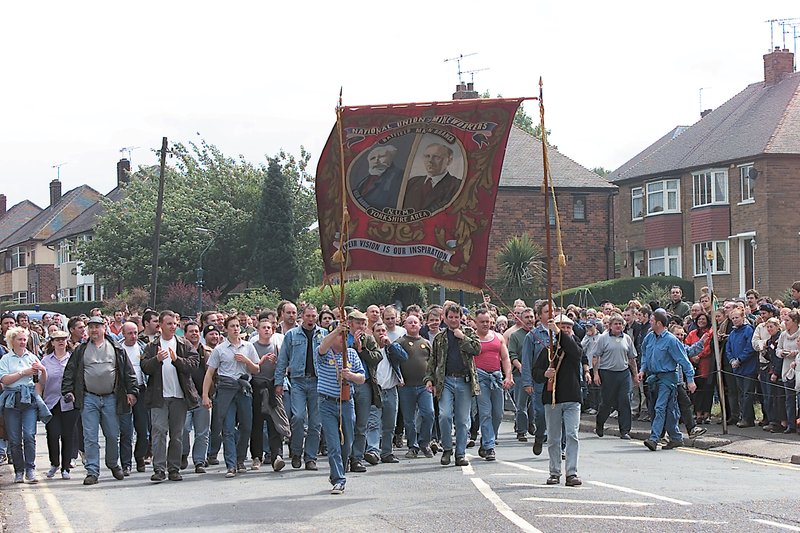
Jeremy Deller: What was Orgeave’s strategic role in the context of the strike of 1984-85?
David Douglass: Prior to the development of the breaking of the strike and what happened at the coke and coal-producing plant at Orgreave, the National Union of Mineworkers had an arrangement with the steel works at Scunthorpe. We allowed them to have sufficient coke, just enough to keep the boilers ticking over. We had been told that the linings of these boilers would crack if they got cold, and they’d close down the steel plant permanently. Obviously we wanted them to keep using coke, and keep producing steel.
Around this same time we had put blockades on the import of fuel into Britain. So the dock-workers were refusing to unload or supervise the unloading of coal, coke or anything that was going to be used in process-plants that we were picketing. And of course, we stopped iron ore being brought into the Scunthorpe plant by picketing the railway. No train carrying coal, coke or iron ore would pass, so we’d effectively sealed it off.
Be part of the extraordinary
Help Artangel continue to make extraordinary art like Jeremy Deller's The Battle of Orgreave possible. Join our community of supports or donate today.
Audio: Spoken Testimonies
2 minutes, 6 seconds
Spoken Testimonies
In these recordings, you can hear the spoken testimonies of three figures variously involved in the clashes between miners and police in 1984. Featured on this page is a testimony from David Douglass, the Hatfield Branch Delegate for the National Union of Mineworkers since 1979.
Also available to listen to on SoundCloud are the voices of Malcom Bray and of Stephanie Gregory, who reads a poem, Chanting, before leading a small group in a chant as could have been heard during the clash.
Listen to all spoken testimonies on SoundCloud.
Image: Jeremy Deller, The Battle of Orgreave, 2001. Production photograph: Martin Jenkinson
Making The Battle of Orgreave
Jeremy Deller proposed his project to Artangel via the Open competition that we launched with The Times and the A4E National Lottery scheme. For the first time Artangel opened its doors to proposals from artists, rather than identifying projects through invitation and discussion. Some 700 ideas came in and Rachel Whiteread, Brian Eno and Richard Cork joined James Lingwood and myself to select a pair of projects to commission and produce.
Jeremy Deller’s The Battle of Orgreave – a dangerously ambitious form of community play proposed via a short fax – was an immediate provocation. The project demanded to be realised even though it appeared impossible. It was probably this that drew us to it.
With Deller’s idea, it was clear that the decoy of a film would be necessary. This would not only provide a source of finance (there was no getting away from the fact that this would be a lengthy and expensive undertaking) but it would also lend the project a certain degree of credibility. Throughout the last ten years at Artangel, we’ve always found that people (especially the owners of extraordinary locations) often become much more interested and much more co-operative if film or television is involved.
Jan Younghusband at Channel 4 came on board with unwavering enthusiasm and Mike Figgis, equally gripped by the scale and ambition of Deller’s vision, agreed to direct the film which fast became much more than simply a means to an end.
We gave ourselves a year in which to build bridges of trust with the community of former miners in South Yorkshire and resolved to abandon the project at the first sign of hostility. They would become the cornerstone of the re-construction. It would be their memories and histories that would be re-staged.
Persuading Britain’s weekend Vikings to participate was less of a problem, having enlisted expert re-enactment tactican Howard Giles onto our team. The day itself unfolded with military precision but came across (particularly in the police cavalry charge down Highfield Lane) as though it was happening for real. Which in many ways it was – a piece of social history re-lived, not re-enacted.
– Michael Morris, June 2002
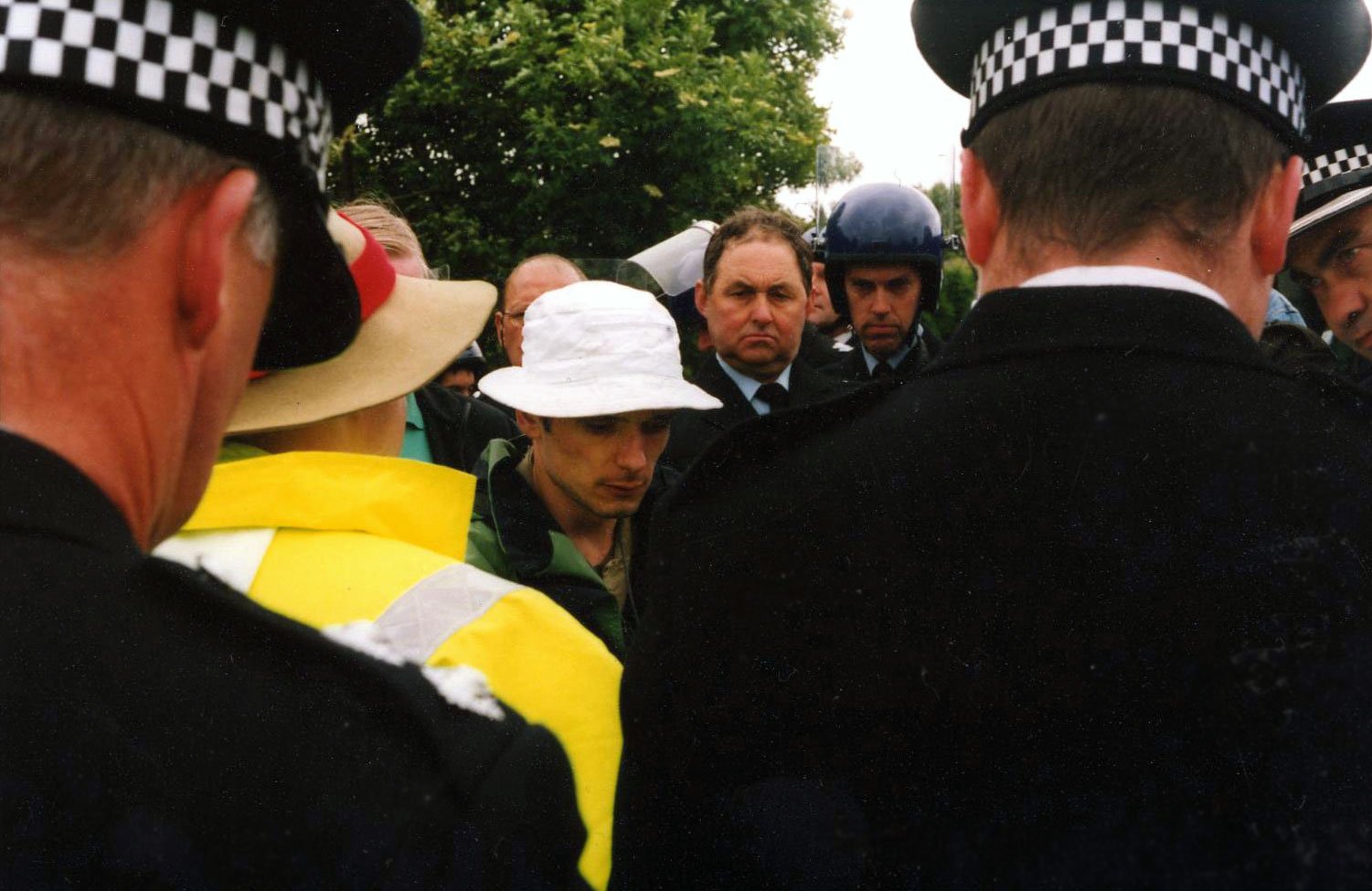
Jeremy Deller
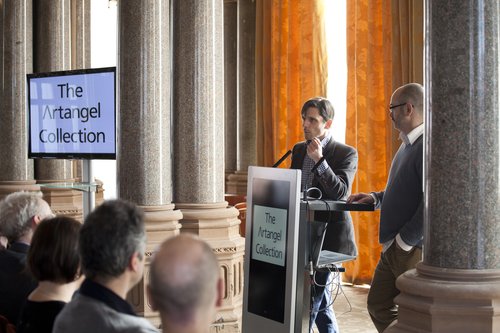
Jeremy Deller
Jeremy Deller was selected as part of the 1999 Open call for proposals from Artangel which resulted in The Battle of Orgreave in 2001. He went on to contribute to Hearts of Darkness, part of A Room for London in 2012.
Deller is a celebrated British artist who makes politically and socially-charged performance works. He was born in London and studied History of Art at the Courtauld Institute of Art, University of London. Deller received the Turner Prize in 2004, and his show at Tate Britain included documentation of The Battle of Orgreave, as well as the installation Memory Bucket, 2003, a documentary about Crawford, Texas – the hometown of George W Bush – and the siege in nearby Waco. In 2007, Deller was appointed a Trustee of Tate.
Much of Deller’s work involves collaboration with individuals and groups of people. Acid Brass, 1997, was a series of concerts and a recording by the Williams Fairey Band playing brass band interpretations of classic acid house anthems. The Uses of Literacy, 1999, was an exhibition of writing and artwork made by fans of the rock band The Manic Street Preachers. And, with artist Alan Kane, Deller initiated Folk Archive, an ongoing project that investigates the state of contemporary folk art in the United Kingdom. In late 2006, Deller instigated The Bat House Project, an architectural competition open to the public for a bat house on the outskirts of London.
Mike Figgis
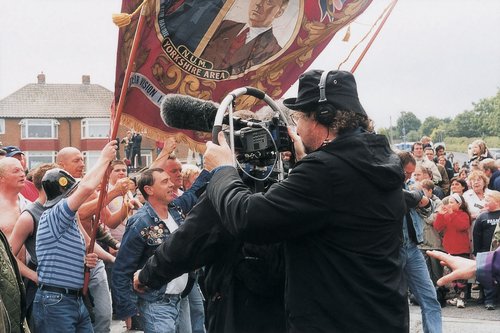
Mike Figgis
Mike Figgis is a British film-maker, writer, composer and photographer who made his feature film debut with Stormy Monday in 1988. His other work includes the Hollywood thriller Internal Affairs, the Oscar-winning Leaving Las Vegas and the experimental split-screen drama Time Code.
For many – participants and spectators alike – this Battle of Orgreave was more flashback than re-enactment. Knowing this made the missiles, the mounted police charges, the beatings, routs and arrests much more than spectacle; it was easy to forget the police’s truncheons were plastic, the miners’ rocks just foam, and that the blood running down some faces was fake. – Alex Farquharson, Frieze
On one level the event combined the innocence of the village fête with an English heritage event. On another, as with his other social projects, Deller short-circuited our finely tuned irony detectors by introducing aspects of real life into the equation, specifically the deep, unresolved feelings of original participants towards others taking part (rumour had it that a small number of the real miners were applying too much gusto to their roles at rehearsals the previous day). For many – participants and spectators alike – this Battle of Orgreave was more flashback than re-enactment. Knowing this made the missiles, the mounted police charges, the beatings, routs and arrests much more than spectacle; it was easy to forget the police’s truncheons were plastic, the miners' rocks just foam, and that the blood running down some faces was fake. – Alex Farquharson, Frieze, September 2001.
A strange alliance of medieval, ancient Greek and even American civil war enthusiasts abandoned their favourite eras yesterday to relive one of the greatest symbolic moments of modern industrial struggle. Lined up on a Yorkshire hillside, long-haired members of a 17th century Cavalier regiment turned into striking miners for a day of noisy clashes with rival amateur actors who had swapped Confederate forage caps for the visors of 1980s riot police. – Martin Wainwright, The Guardian, 18 June 2001.
At one point a heated argument broke out, about who had been at Orgreave and who had not. Accusations flew, voices were raised. Someone came over and abused me for forcing the film on them and reminding them of times best forgotten. 'Don’t worry about him,' someone else said. 'He doesn’t understand. He was never a miner.' – CJ Stone, Big Issue, 14 October 2002.
Event Devised by – Jeremy Deller
Artangel Event Producers – Michael Morris & Antoniette O’Loughlnd
Reenactment Director – Howard Giles
Assistant Director – Ian Castle
Reenactment Managers – Barbara Giles & Natalia Wieczorek
Camera – David Barker, Mike Elay, Nick Fenton, Mike Figgis, Simon Poulter & Mike Todd
Sound Recordist – Ray Beckett
Costume Designer – Theresa Hughes
Music – Mike Figgis & Arlen Figgis
Editor – Nick Fenton
Line Producer – Ginny Roncoroni
Executive Producer – Michael Morris
Producer – Sophie Gardiner
Director – Mike Figgis
Artangel Media – Channel 4
1st Assistant Director – Simon Petter
2nd Assistant Director – Lee Mason
Director’s Assistant – Louis Figgis
Production Co-ordinator – Helen Roshier
Production Runner – Michael Wynne
Credits
This project was supported by Arts Council England. Artangel is generously supported by the private patronage of The Artangel International Circle, Special Angels, Guardian Angels and The Company of Angels. The film The Battle of Orgreave is included in The Artangel Collection.

From the top:
- Jeremy Deller, The Battle of Orgreave, 2001. Production photograph: Martin Jenkinson
- Jeremy Deller, The Battle of Orgreave, 2001. Production photograph: Martin Jenkinson
- Production still from Jeremy Deller's The Battle of Orgreave, 2001. Photograph: Martin Jenkinson
- Jeremy Deller, The Battle of Orgreave, 2001. Production photograph: Martin Jenkinson
- Jeremy Deller, The Battle of Orgreave, 2001. Production photograph: Martin Jenkinson
- Jeremy Deller during production of The Battle of Orgreave, 2001. Photograph: Martin Jenkinson
- Jeremy Deller speaking at the launch of The Artangel Collection in 2011
- Mike Figgis filming Jeremy Deller's re-enactment of the Battle of Orgreave, June 2001. Photograph: Parisa Taghizadeh