
Register your interest
Want to borrow the work for an upcoming presentation? Get in touch using this form.
Dinh Q. Lê
Dinh Q. Lê was born in Hà Tiên in then South Vietnam in 1968. In the late 1970s, his family escaped by boat before eventually settling in the US where he completed his education. In 2007, he co-founded Sàn Art in Ho Chi Minh City, Vietnam, where he was based until his passing in April 2024. In 2010 he was awarded the Prince Claus Award for his outstanding contribution to cultural exchange. Lê’s work has been included in many international group shows including Documenta 13 in Kassel, Germany (2012), the 2nd Singapore Biennale (2008), the Gwangju Biennial (2006) and the Venice Biennale (2003). He was the first Vietnamese artist to have a solo show at the Museum of Modern Art, New York (2010). A major survey exhibition, Dinh Q. Lê: Memory for Tomorrow, was presented at the Mori Art Museum in Tokyo in 2015.
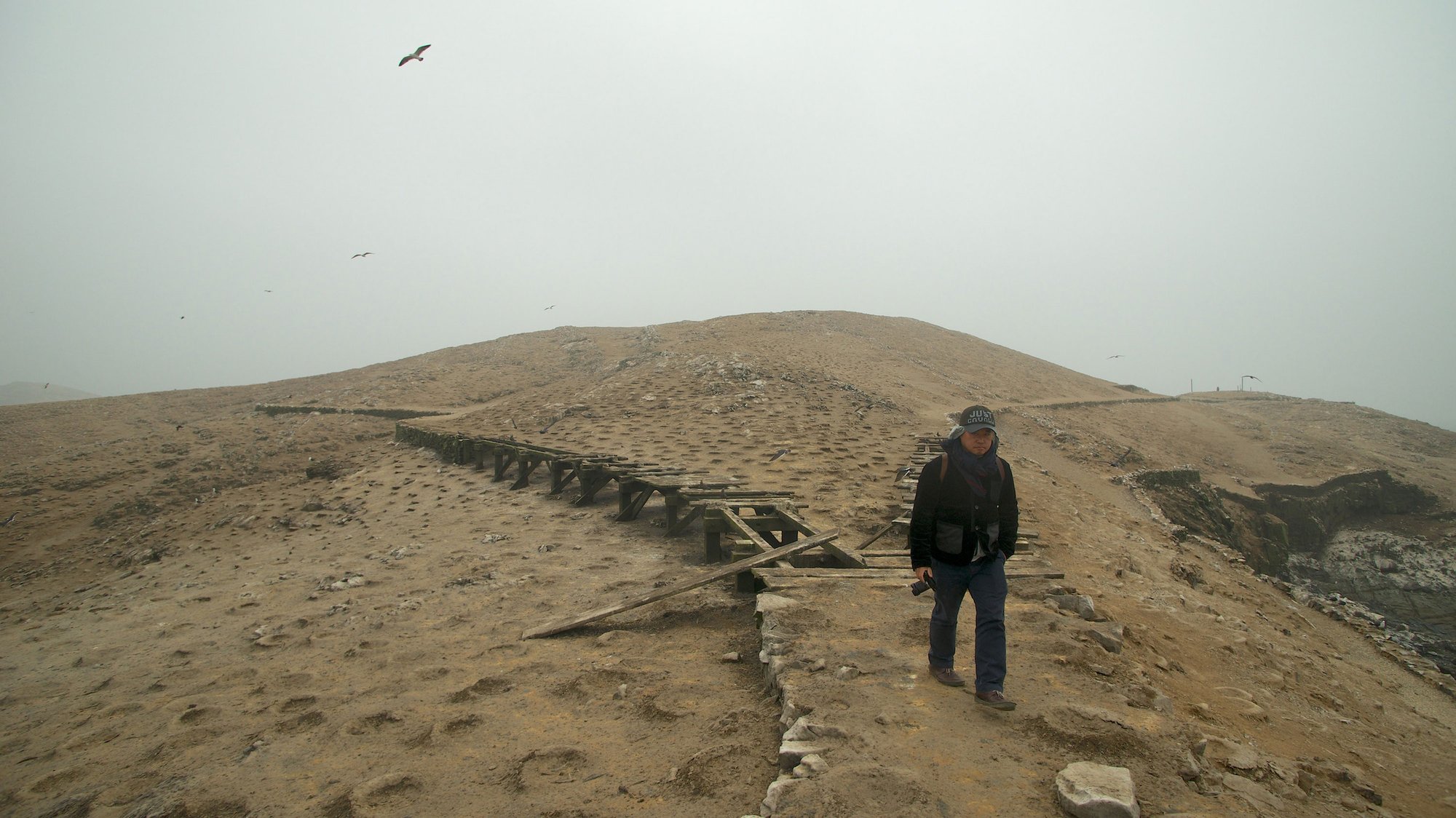
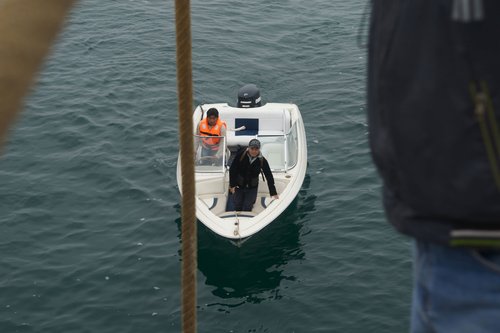
Images: (left and above) Dinh Q. Lê on the Guano Islands 2015, photo courtesy the artist.
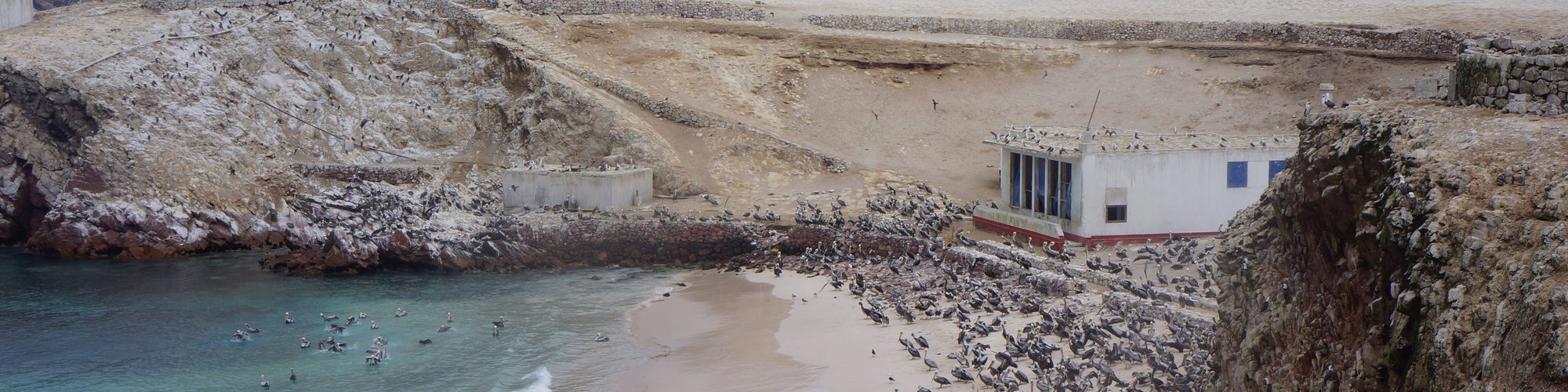
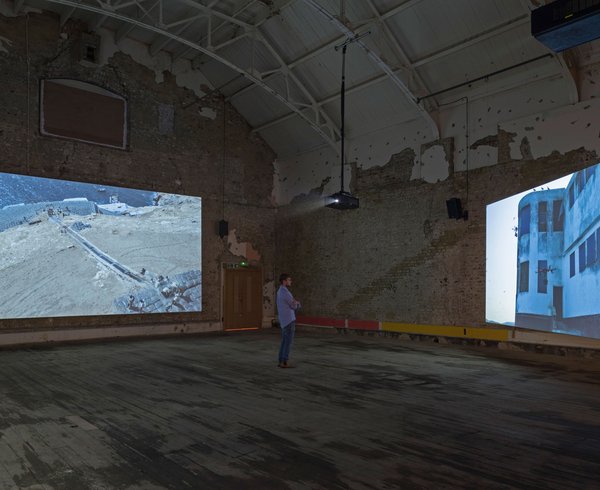
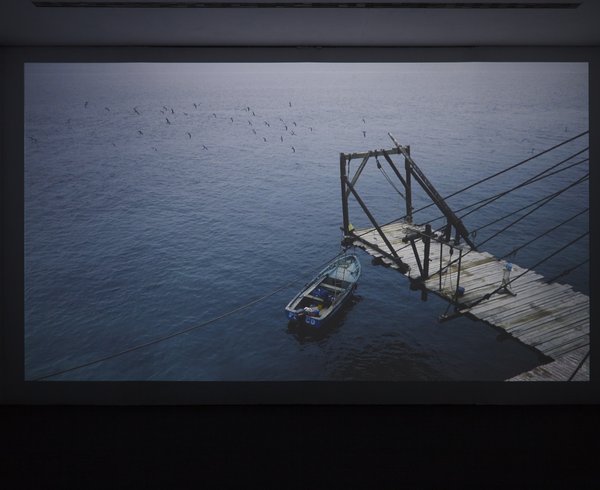
What makes the installation arresting is the diversity of filming. Lê filmed the islands from a boat, a bird's eye view and by using a drone. The drone serves to express that the history of the Chincha Islands should not be ignored and relates to how drones are being increasingly used for gathering information. – Anna Sansom, DAMN Magazine
The work is powerfully unsettling, helped no end by Daniel Wohl’s mournful soundtrack. These islands are so vile, so barren and inhospitable, but they tell a brutal story of economics, migration and colonialism. – Eddy Frankel, Time Out, 24 August 2016
Britain’s role in the Chinchas was shameful: our merchants exploited Chinese bonded labour in mining the guano, forcing them to work in terrible conditions. Animations of the workers’ shadowy ghosts occasionally appear amid the dramatic island landscape and in the now derelict prison-like workers’ dormitories that Lê captures. – Ben Luke, London Evening Standard, 31 August 2016
What makes the installation arresting is the diversity of filming. Lê filmed the islands from a boat, a bird's eye view and by using a drone. The drone serves to express that the history of the Chincha Islands should not be ignored and relates to how drones are being increasingly used for gathering information. – Anna Sansom, DAMN Magazine, February 2016
The mutability of the past is an Orwellian theme: ‘Who controls the past controls the future: who controls the present controls the past,’ runs the Party slogan in 1984. Lê’s apprehension of this leads him to cross threads of received historical narrative and to overlay them with points of critical reversal. The Colony ends as we see the cameraman with his hands extended receive a drone as it descends from a day’s shoot. At this point of casual closure which reveals the film’s production, the author recedes so that, to some extent, existential responsibility for catastrophic historical events is laid open and the viewer eventually feels a reprieve from Kafkaesque anxiety and absurdity. – Stephen Lee, Art Monthly, March 2016
Credits
Commissioned by Artangel, Ikon, Birmingham, Han Nefkens H+F Collection, Proyecto Amil, Lima, with additional support from, Catherine Petitgas, Private Collection, New York, Shoshana Wayne Gallery. Produced by Artangel and TANQ Studios, this project was supported by Arts Council England, Artangel International Circle, Special Angels, Guardian Angels and The Company of Angels.
The Colony is part of The Artangel Collection, an initiative to bring outstanding film and video works, commissioned and produced by Artangel, to galleries and museums across the UK. The Artangel Collection has been developed in partnership with Tate, is generously supported by the Esmée Fairbairn Foundation and The Foyle Foundation and uses public funding from Arts Council England.