
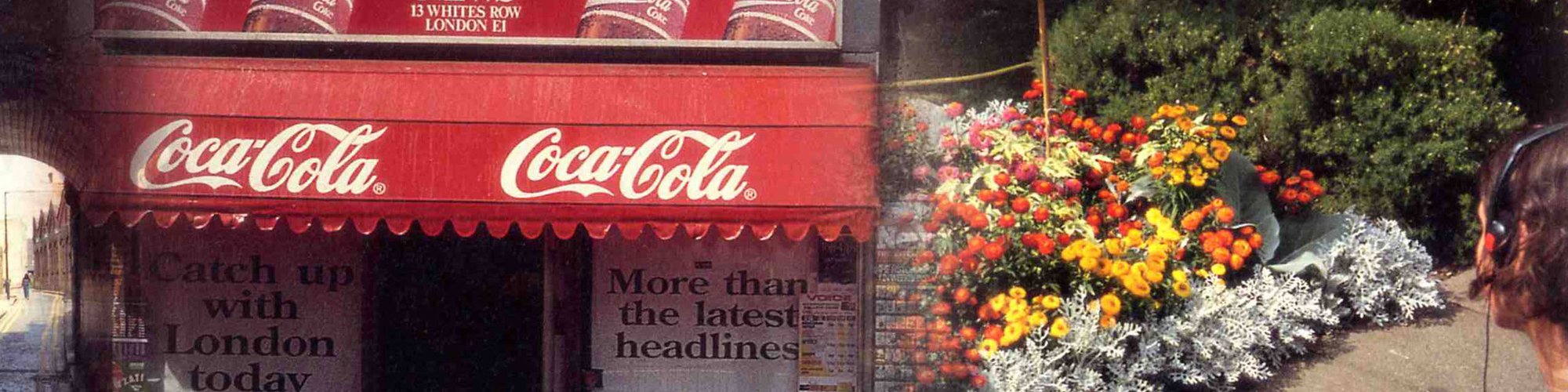
Audio Walk: The Missing Voice (Case Study B) (Part One)
14 minutes, 11 seconds
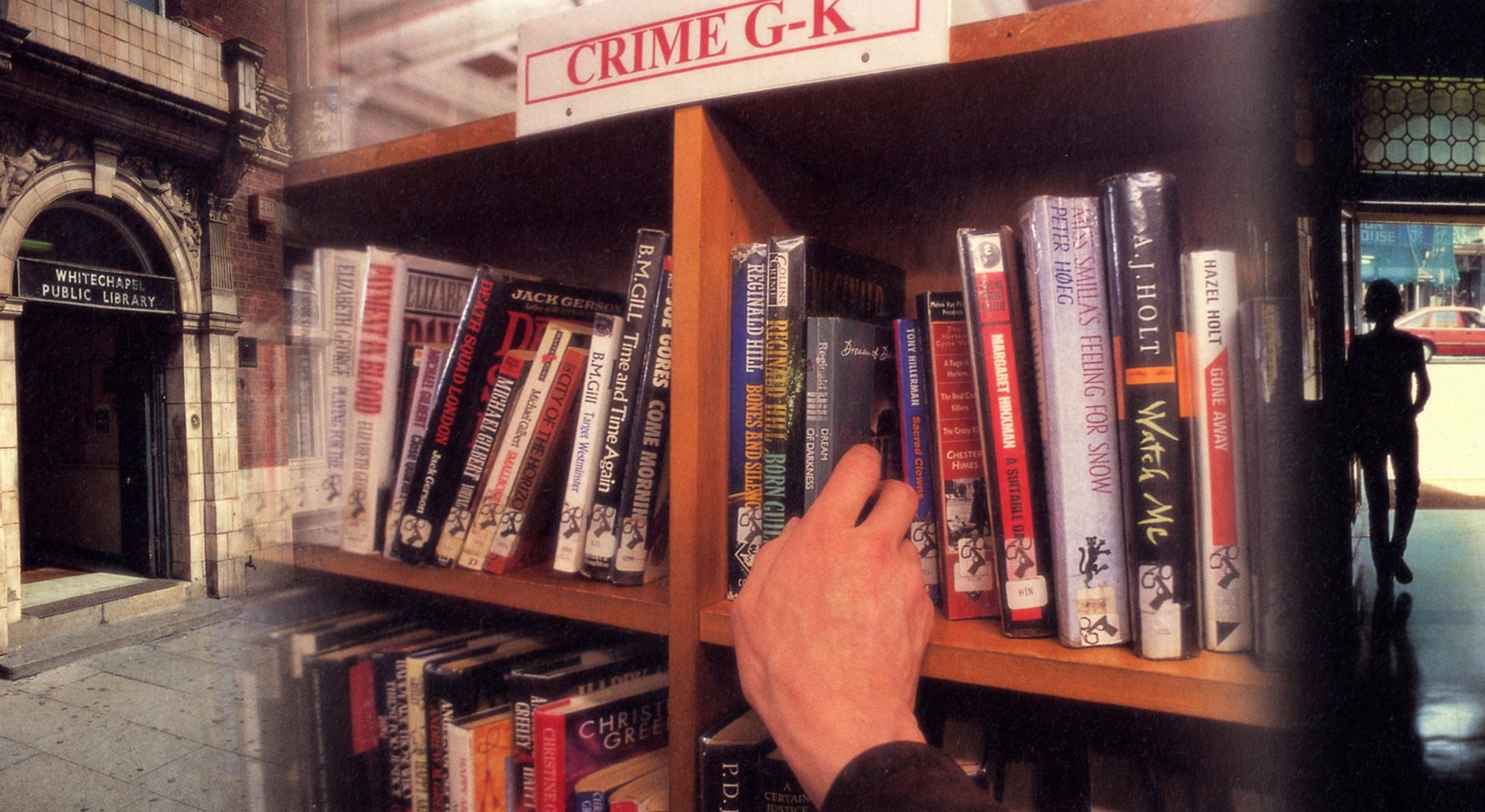
He reaches to pick up a book, leafs through a few pages and puts it back on the shelf. He's wandering off to the right. Pick up the book he looked at.
The Missing Voice (Case Study B) part one is available to listen to here (left) or to stream or download from Soundcloud.
But, The Missing Voice (Case Study B) is best experienced by streaming or downloading to your own portable audio device via Soundcloud to listen to whilst following the original route beginning at The Whitechapel Gallery, London. The walk takes around 45 minutes to complete and you are instructed where to go by the voices, no need for a map or guide.
Image: Janet Cardiff, The Missing Voice (Case Study B), 1999. Photograph: Gerrie van Noord
Audio Walk: The Missing Voice (Case Study B) (Part Two)
5 minutes 46 seconds
Audio Walk: The Missing Voice (Case Study B) (Part Two)
Here's another banana peel. One night when I was small, I went downstairs to get a glass of water. In the kitchen doorway a man's body hung from the neck.
The Missing Voice (Case Study B) part two is available to listen to here (left) or to stream or download from Soundcloud.
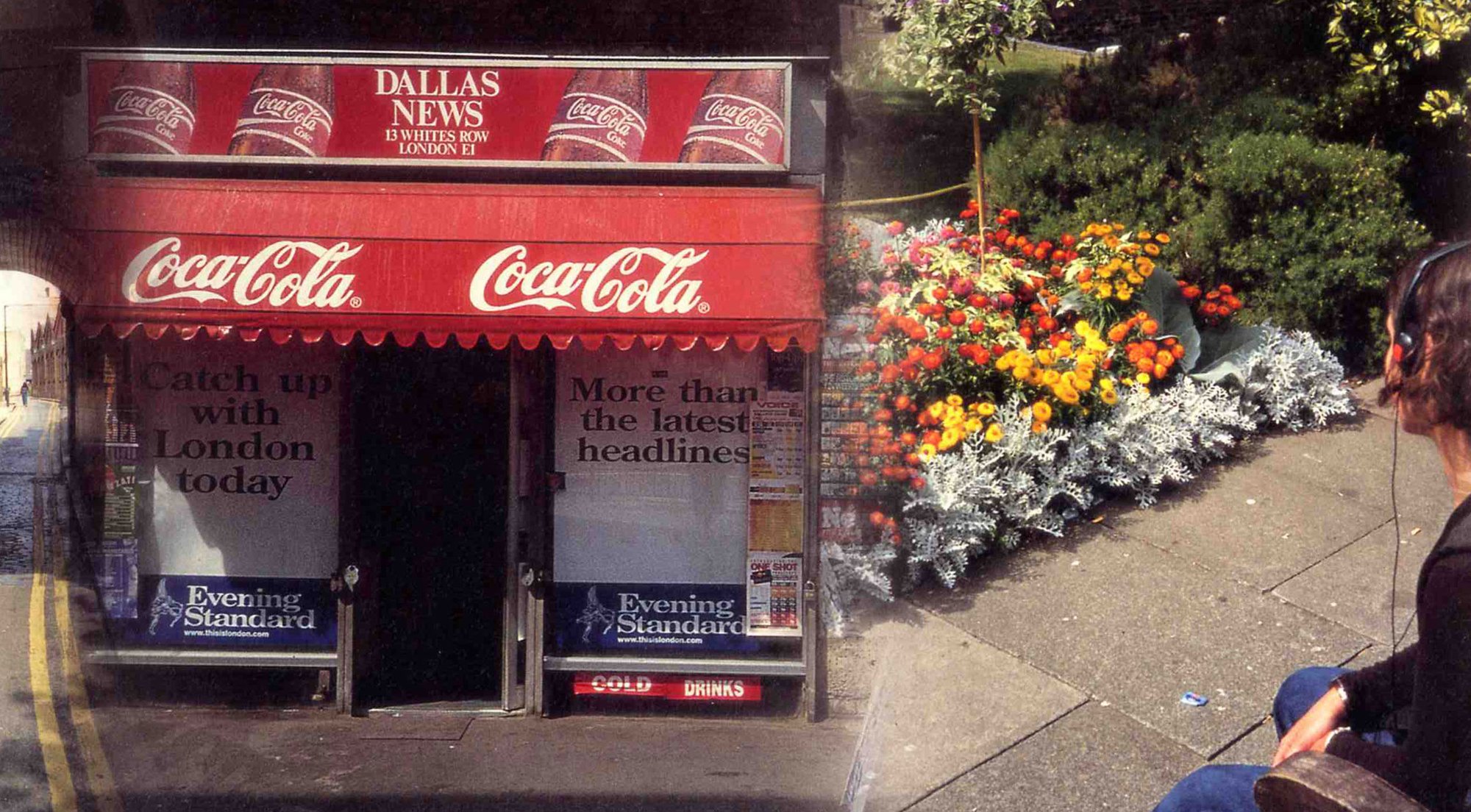
Image: Janet Cardiff, The Missing Voice (Case Study B), 1999. Photograph: Gerrie van Noord
Audio Walk: The Missing Voice (Case Study B) (Part 3)
16 minutes 30 seconds
Audio Walk: The Missing Voice (Case Study B) (Part 3)
I lie awake feeling the bed breath beneath me. If I stop breathing, it stops too. Let's go outside now. The exit is at the back of the church.
The Missing Voice (Case Study B) part three is available to listen to here (left) or to stream or download from Soundcloud.
Image: Janet Cardiff, The Missing Voice (Case Study B), 1999. Photograph: Gerrie van Noord
Making The Missing Voice (Case Study B)
By Janet Cardiff, Lethbridge, September 1999
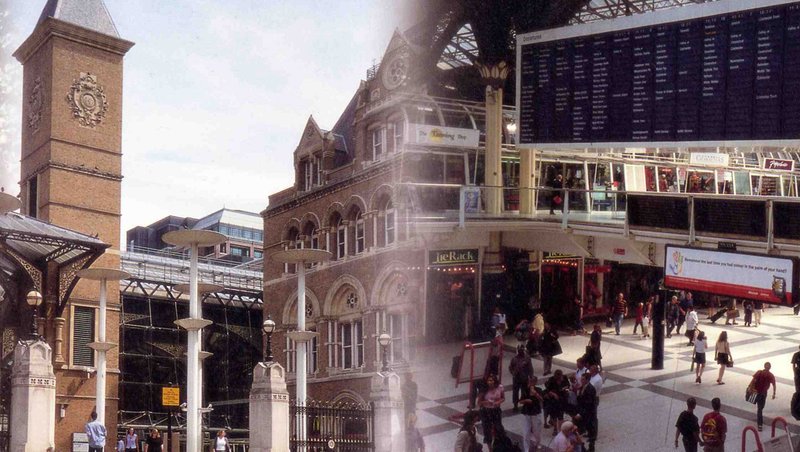
Sometimes I don't really know what the stories in my walks are about. Mostly they are a response to the location, almost as if the site becomes a Rorschach test that I am interpreting. For me The Missing Voice was partly a response to living in a large city like London for a while, reading about its history in quiet libraries, seeing newspaper headlines as I walked by the news stands, overhearing gossip, and being a lone person getting lost amongst the masses. Normally I live in a small town in Canada, so the London experience enhanced the paranoia that I think is quite common to a lot of people, especially women, as they adjust to a strange city. I was trying to relate to the listener, the stream of consciousness scenarios that I invent all of the time in my mind as I see someone pass or walk down a dark alley. It is one of my frustrations and entertainments to constantly have these alternative visions and voices, quite often scary or violent, running through my brain as I encounter the simplest of realities. I think it is a desire to dramatize my life, make it real by making it filmic or probably the result of reading too many detective novels or watching too many movies.
Part of my process for this piece was to walk around and take notes on my mini voice recorder. While relistening to these notes in my apartment I realized how this voice became another woman, a different character from myself, a companion of sorts. Also this voice seemed metaphorically to represent how we all have multiple personalities and voices. I saw the woman in the story as being alienated from her own self, but searching for herself through this voice, play-acting, creating false dangers and love affairs, wanting her own story dramatized. At the same time her "voice over" the one that speaks in the third person removes her from the story, keeps her at a safe distance.
Perhaps it is the nature of the walkman as a medium, but most often the stories I use are about the difficulties of relationships and real communication. I see the device of the walkman as a way to have surrogate relationships. I talk with someone intimately, create a relationship, but I am at a safe distance. It is a coward's way but I hope that my pieces give people a sense of knowing someone a little, even if it is only with a unknown voice, a missing one.
Inner City
The Missing Voice (Case Study B) was a part of Inner City, a project which explored the interface of the city and the word in both its spoken and written forms. It encouraged writers and artists to excavate a range of urban places and contemplate the changing nature of city environments and the counterpoint between narrative and place; between language and location.
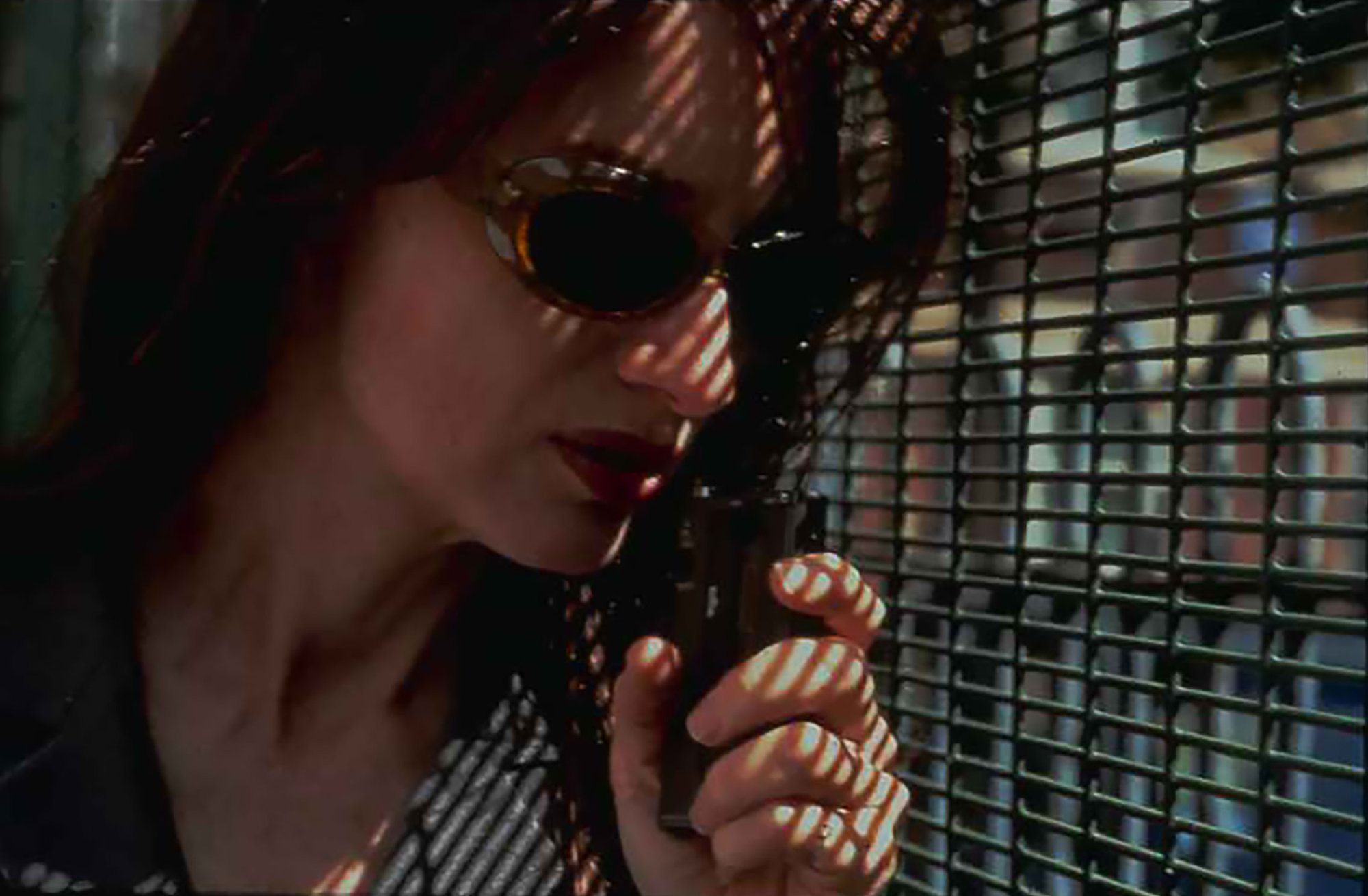
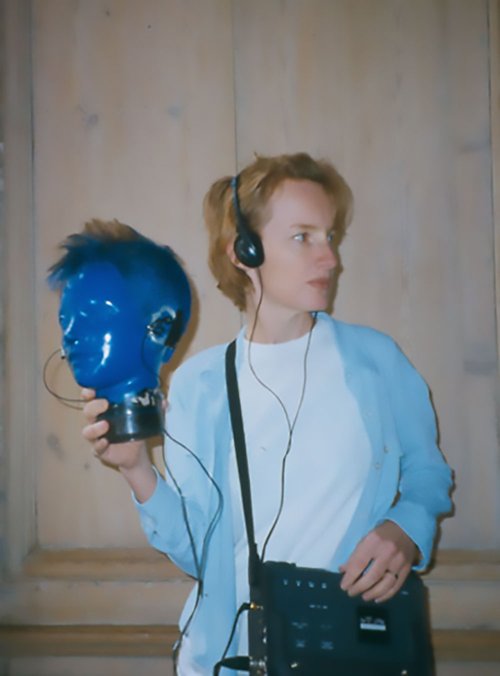
Janet Cardiff
Janet Cardiff has built a growing international reputation with her highly distinctive body of site-specific work that comprises walks, sound-pieces and installations. Currently based between Berlin, Germany and Grindrod, British Columbia, Canada, her other audio-walks have taken place in locations such as the Mall in Washington DC (Words Drawn in Water, 2005), the Hebbel Theatre in Berlin (Ghost Machine, 2005) and Musée d’Art Contemporain in Montreal (Conspiracy Theory / Théorie du complot, 2003). Working with her longtime collaborator George Bures Miller - with whom she has forged a critically hailed multimedia practice - Cardiff's installations have included The Murder of Crows (2008) at Berlin's Museum für Gegenwart and Pandemonium ( 2005) at the Eastern State Penitentiary in Philadelphia.
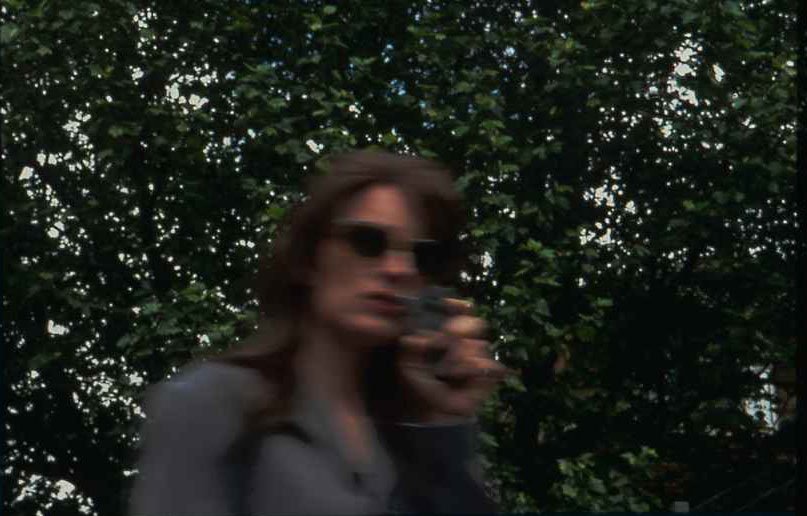
Images: Portraits of the artist Janet Cardiff, 1999. Photographs: Gerrie van Noord
You experience two realities at once. And you can begin to play this game afterwards, imagining that the apparently random street scenes around you are carefully choreographed and soundtracked to a mysterious design. – Steven Poole, the Guardian, 17 November 2001
This is the end point of Janet Cardiff’s ‘The Missing Voice (Case Study B)’, a brilliant soundwalk, part history and part film-noir stream-of-consciousness, that started off at Whitechapel Library next door to Aldgate East tube station. The library no longer exists, either. It has migrated into the realm of dreams. – Time Out, 4 February 2008
Cardiff acts as hypnotist, keeping the visitor off-balance and conjuring up asteady stream of associations that are as diverse as the participants' memories – Gregory Williams, PAJ: A Journal of Performance and Art PAJ 59 (Volume 20, Number 2), May 1998
there’s one part where a car comes down Wentworth Street and I say, stop and wait for the car. And even when I was replaying it to test it out I’d have to wait for that car. My body wouldn’t allow me to step on the road, even though I knew it wasn’t there. – Janet Cardiff interviewed by Robert Enright, Border Crossings magazine, issue 78, May 2001
Credits
Comissioned by Artangel as part of Inner City, a series exploring the interface of the city and the word in its many forms. Inner City encouraged writers and artists to excavate a range of urban environments and to contemplate the chnaging nature of the city and the counterpoint between narrative and place, between language and location. Produced with assistance from the National Lottery through the A4E scheme administered by the Arts Council of England. Funders and collaborators: Bloomberg and Whitechapel Gallery.
Artangel is generously supported by the private patronage of The Artangel International Circle, Special Angels, Guardian Angels and The Company of Angels.