
Audio: A Tour of Margate
2 minutes 12 seconds
Audio: A Tour of Margate: Introduction by Wendy Ewald
This recording introduces an audio trail of Margate by Wendy Ewald as part of her eighteen-month-long project.
Available to listen to on Soundcloud.
Listen to the rest of the tour by Wendy Ewald.
Or for individual locations:
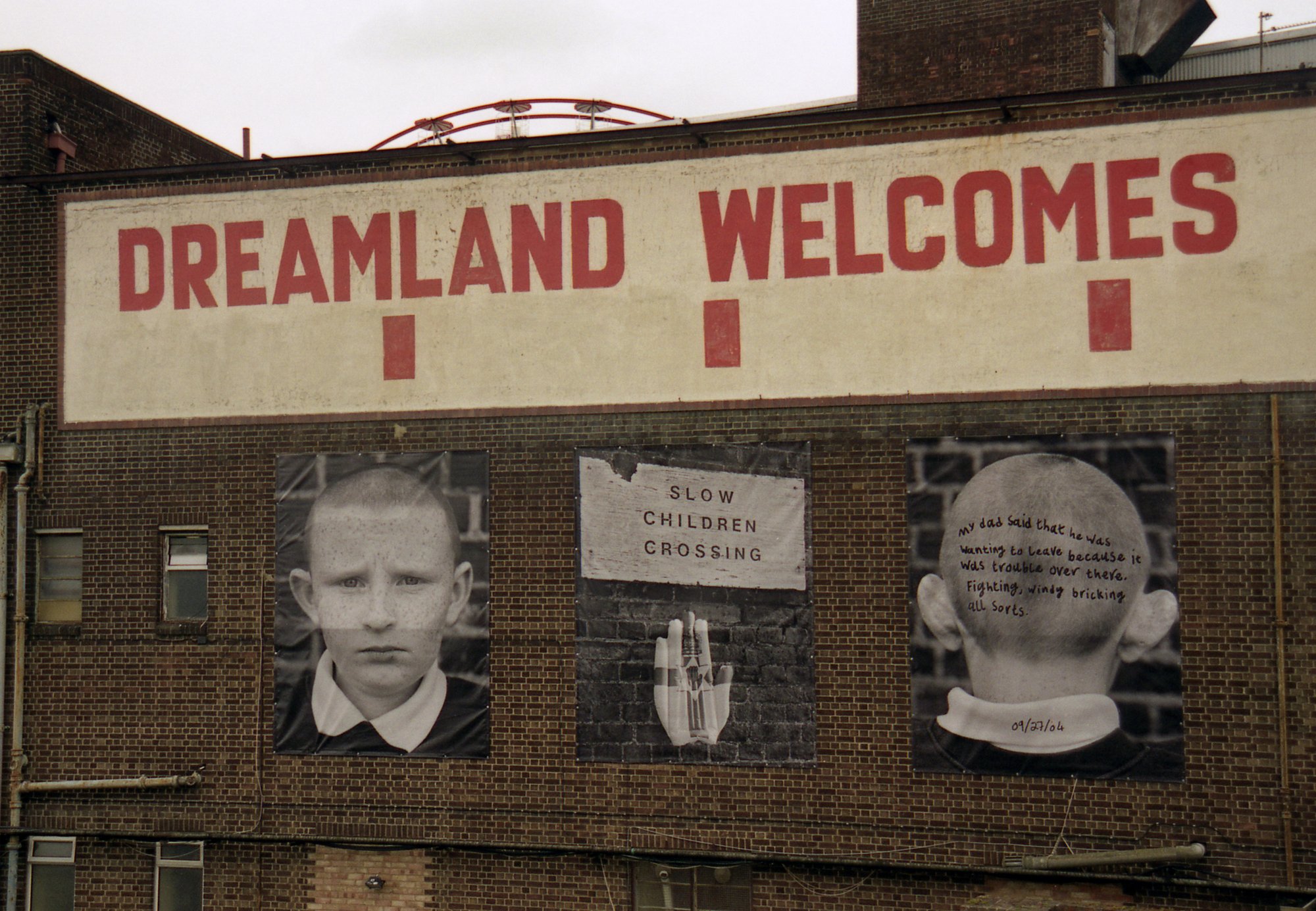
Dreamland and The Punch & Judy
A Tour of Margate: Dreamland Entrance
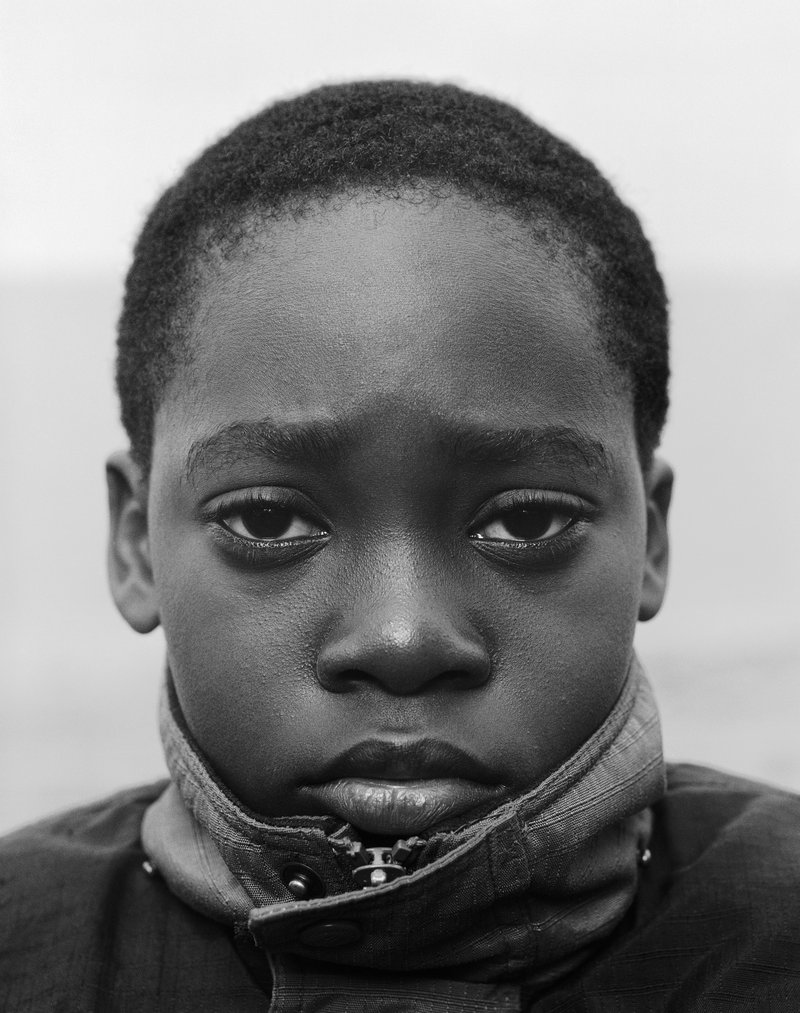
We came from Congo on a plane
We left because there is a war in Kinshasa. We left my cousins, the houses and friends. I brought nothing... well, a little bit. It was just me and my mum. The journey wasn't good, but I liked the plane.We always fastened our seatbelts and in the window it made clouds. Kinshasa is not good because it is unsafe. One day at school the kids were throwing stones at the soldiers, and there were bullets in the air. Some students were killed. The students who were against the president wanted to come into school to loot us. It was then that the U.N. man threw a gas bomb so they couldn't take us. My mother couldn't come to get me because they were wrecking cars in the streets and throwing stones, so she sent her cousins instead. I didn't feel good. I didn't want to go back to school after that. I still remember the day they arrested my father and gave me some slaps. After, they cut my brother's head. I was scared because the soldiers were killing people. I thought they also wanted to kill me. My mum and I escaped.
Sometimes I dream I'm singing. Sometimes I dream I'm dancing. I dream that I am grown up and speaking English. I dreamt that I was eighteen. It was the day of my party. All my friends came. During that party I heard someone knocking on the door. I opened it and saw my brothers and sisters. They were older. My mum was sleeping. I tried to call her. My mum managed to wake up and change and then she went to their house. I only dreamt it the other day. I want to dream it for a long time. I like taking photos. It's going to give me memories. I'll have good memories of Margate because it's a nice town. There are no problems here. It is safe and everything works well. Everyone goes shopping and does what they want. I want to stay here.
Wendy Ewald on Towards a Promised Land
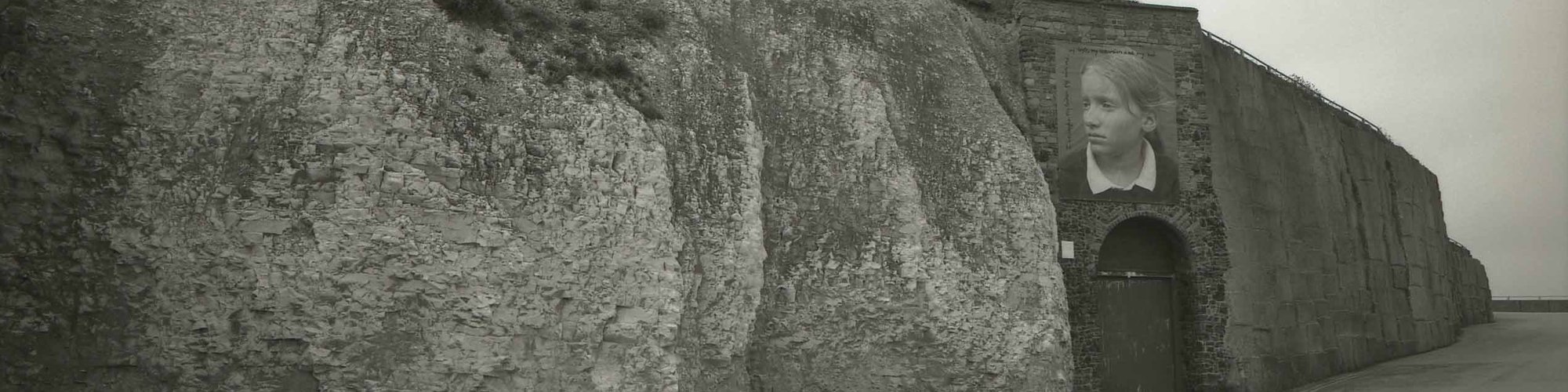
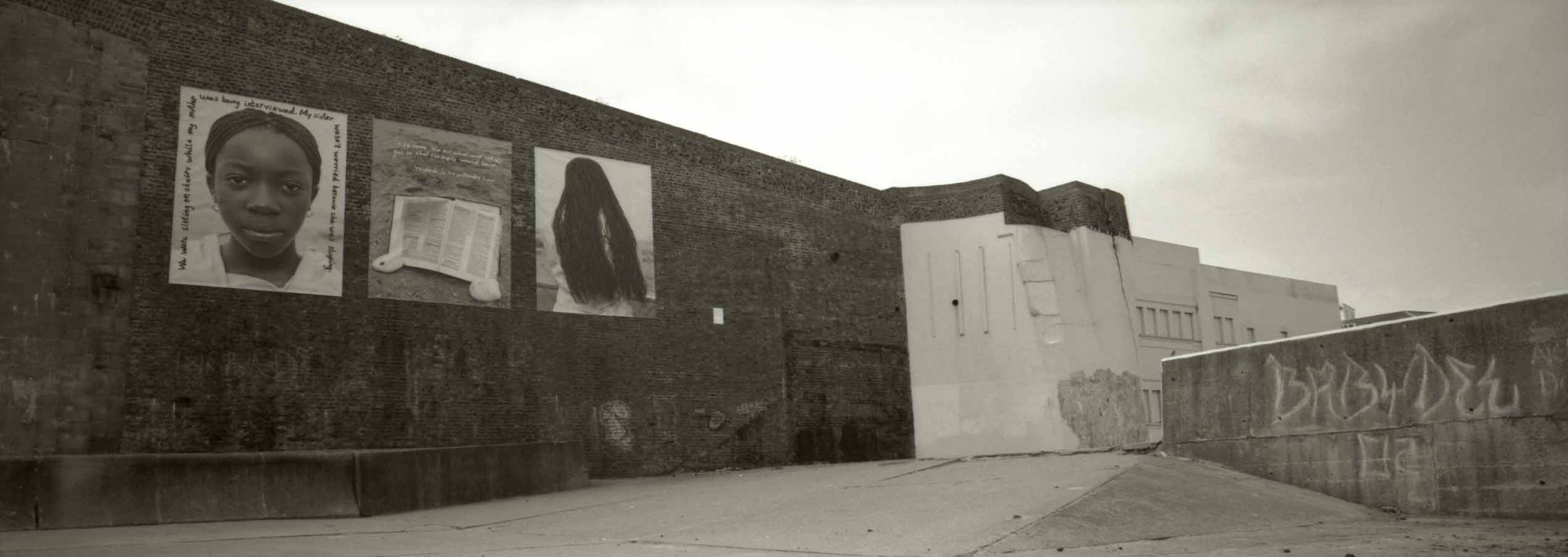
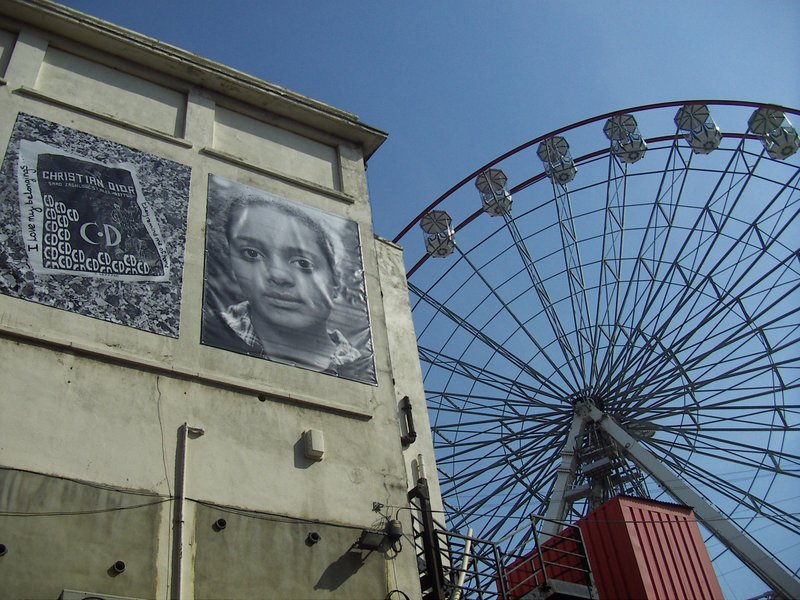
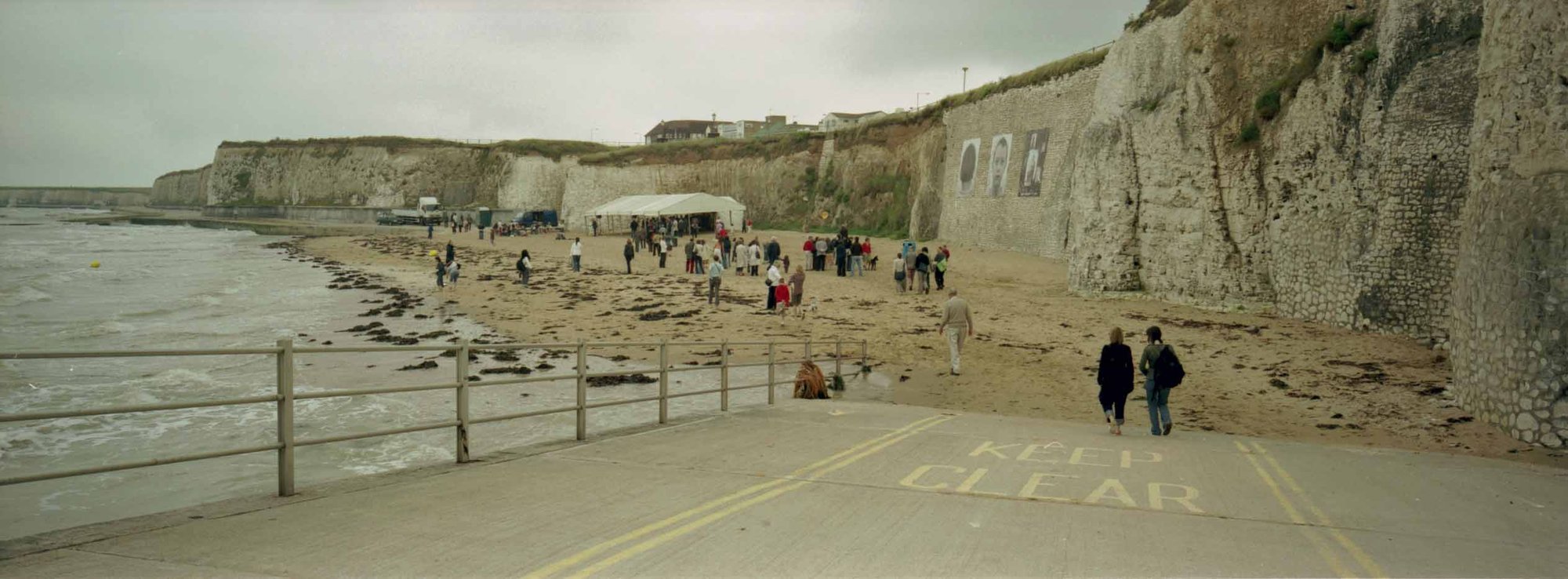
Towards a Promised Land opened in July 2005 on the chalk cliffs near Margate, UK. The five 3 by 4 meter triptychs were displayed against the retaining walls protecting the white cliffs of Margate, a town that was once a thriving vacation center, but that is known more today as a "holding location" for individuals and families who have sought refuge in England from the wars and disorders of their home countries - but have come into the country without the "proper" documents.
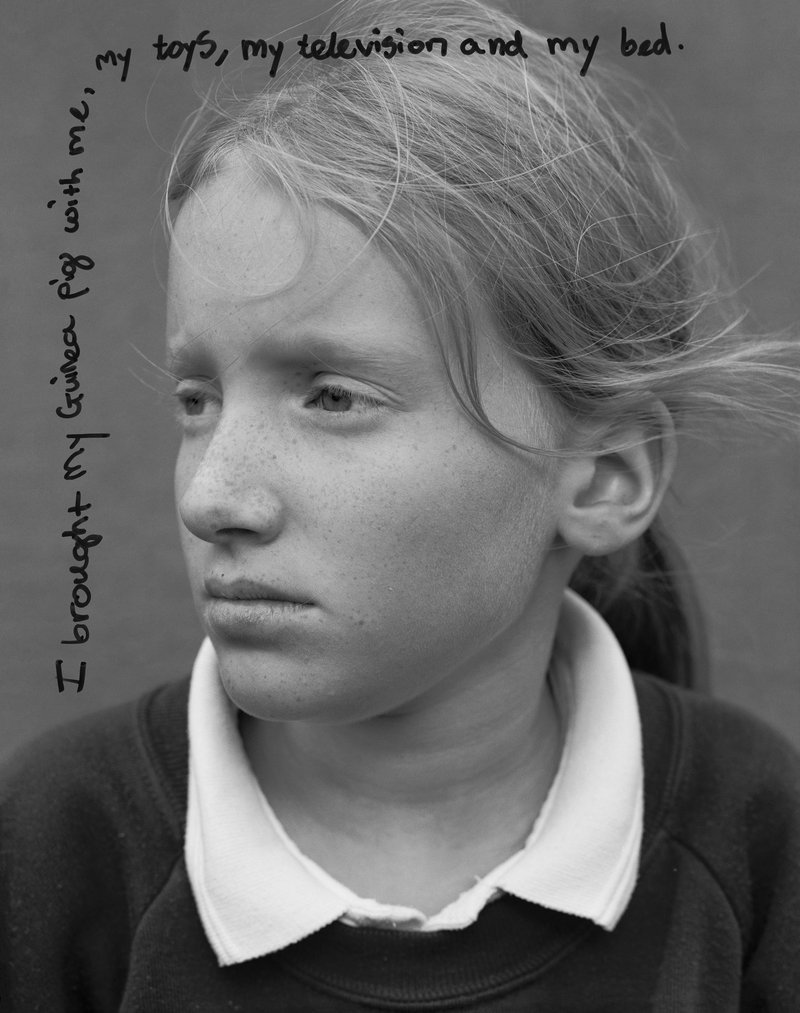
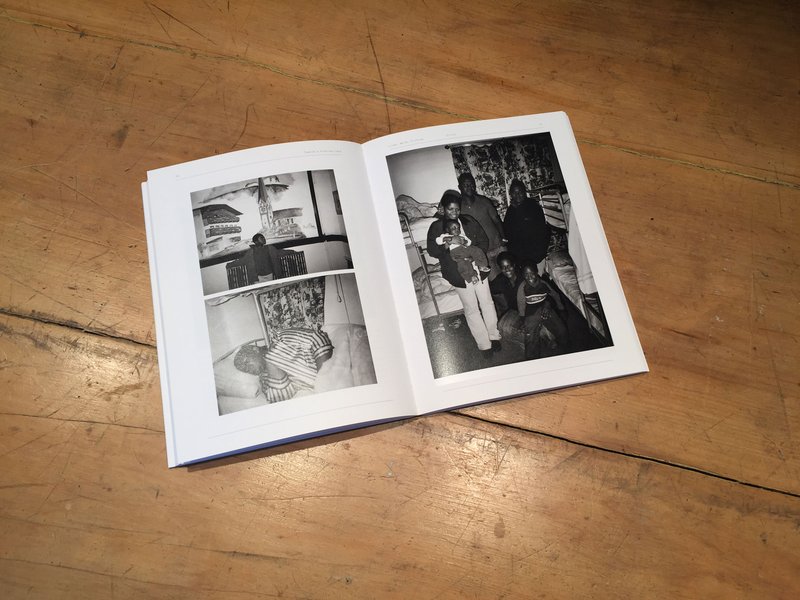
Each triptych consists of a photograph of a child's face, a second of the back of the head and in the middle an image of personal possessions that the child brought with him. The photographic banners hung with the children looking out to sea and inward to a possible new home. Most banners show text as well as image. The youths wrote directly on my photographs reflecting on their pasts, futures and what they left behind. I worked for more than a year with 11 of these children, whose lives have been marred by violence and dispossession. In addition to making large portraits of the children, I taught them basic camera skills. They made photographs of their early days in Margate, maps of their journeys, and recorded their stories.
Wendy Ewald in conversation with Michael Morris
Michael Morris: How were the parameters of such an ambitious project first mapped out?
Wendy Ewald: I visited Margate about a year before the project actually began. At that point we had no idea who we were going to work with. We walked around and visited schools and groups and institutions; we went to the mosque; we met kids who were caring for adults. It was very interesting, overwhelming actually, as there were about ten different groups I could have worked with.
When I visited Northdown Primary School, the principal told me that there was a 50% turnover in the student population every year. That was amazing to me, that a town could change so much in one year. With that statistic, I began trying to focus on the experiences of people starting their lives over in Margate and what those experiences were for children, in particular.
Towards a Promised Land
Children have taught me that art is not a realm where only the trained and the accredited may dwell. The truly unsettling thing about children's imagery is that, despite their inexperience with what adults might call rational thinking, their images tap into cetrain universal feelings with undeniable force and subtlety. — Wendy Ewald.
Towards a Promised Land documents Wendy Ewalds work with twenty-two children new to British seaside town Margate. Interviewing them about their pasts, she taught them how to use a camera at a pivital moment of change in their lives. . This book brings together Ewald's and the children's work with a selection of interviews, writing and commentaries on the contemporary search for a sense of place in a world of constant and turbulent change.
- Paperback: 192 pages
- B/W
- Publisher: Steidl/Artangel
- ISBN: 3865212875
- Dimensions: 10.3 x 7.9 x 0.7 inches
Wendy Ewald
For more than thirty years, Wendy Ewald has collaborated with children and adults around the world, working in communities in Labrador, Appalachia, Colombia, India, South Africa, Saudi Arabia, Holland, Mexico, Canada, North Carolina, and New York. She partners her keen observational and creative skills with her students' imaginations, encouraging them to use cameras to create individual self-portraits and portraits of their communities and to articulate their dreams and hopes while working with her in visual and verbal collaboration.
Born in Detroit in 1951, Ewald is currently a senior research associate at Duke University’s Center for Documentary Studies and an artist-in-residence at the university’s John Hope Franklin Center. Over a decade ago, she founded the Literacy Through Photograph program in Durham, North Carolina, now thriving in many elementary and middle schools.
Ewald has received many honors in recognition of her innovative creative practice, including a MacArthur Fellowship and a Lila Wallace Reader’s Digest Visual Arts Fellowship, as well as grants from the National Endowment for the Arts, New York Foundation for the Arts, Andy Warhol Foundation, and the Fulbright Commission.
Credits
Artangel is generously supported by Arts Council England, and by the private patronage of The Artangel International Circle, Special Angels, Guardian Angels and The Company of Angels.